
By Robert K’odingo, MPRSK
The air in the Zurich’s Moods club was thick with that particular Swiss politeness, a low hum of chatter over clinking glasses. However, the moment Claudia Masika walked on stage, she didn’t just break the ice; she melted the whole room.
Dressed in a cascade of vibrant textiles, a headband holding her braided hair, crowning her like a queen, she radiated a warmth that felt like a direct import from the shores of Kenya’s Lake Victoria.
Then, the music started, a groove that slipped under your skin, a fusion of folk tradition and slick, modern funk that was impossible to resist. This wasn’t just a performance; it was an invitation.
During my first solo visit to Switzerland – winter of ’24 – while trying to locate the Kenyan community in this all-white foreign land, I had heard about Claudia, the Swiss, Kenyan-born force of music who had carved a unique space in the European music scene.

I knew the accolades, the festival billings from Montreux to Sziget, the term “Afro-fusion.” It’s a label that can mean many things, a testament to a genre defined by its fluidity.
Unlike the more specific, politically charged Afrobeat pioneered by Fela Kuti in the 60s Nigeria, Afro-fusion is a broader conversation, a dynamic space where artists blend traditional African sounds with everything from jazz and soul to hip-hop and reggae.
It’s a genre born from the cultural crossroads of the 20th and 21st centuries, and Claudia Masika is one of its most compelling voices.
But no description could have prepared me for the sheer life force of her presence.
Her voice, a rich and insistent timbre, carried stories in every note. It dipped into the soulful cadences of her Luo heritage, taught to her by dani (grandmother) who first saw the “magic” in her, before soaring over a tight, international band that played with the joyful precision of a single organism.
Being a Luo, like her, I got lucky and later, sat down with her as the post-show adrenaline settled, nothing changed, I found the same vibrant energy, now channeled into a quiet, thoughtful intensity.
I asked her about that seamless blend of worlds in her music.
“It’s not a blend,” she corrected me gently, her eyes smiling widely.
“It’s a conversation. The songs of my grandmother are my roots. They are the ground I stand on. The sounds I found from my motherland, Kenya, and then here in Switzerland… they are the branches. They can grow in any direction, but they are always connected to the same tree.”

Retrospectively, during our continued conversation, I learned, that tree is planted firmly in the soil of Migori County, western Kenya.
As a teenager, Claudia was already weaving the ancient melodies of the Luo people with contemporary rhythms, a sound that earned her early radio hits and set her on a path to Europe.
Switzerland, a country known for its precision and reserve, might seem an unlikely place for such an effervescent spirit to land. Yet, she has not just survived here; she has thrived, building a devoted following, gig by meticulous gig.
Promoters call her “pure joie de vivre,” and watching her coax a reserved Swiss audience into a dancing, smiling crowd, you understand why.
She doesn’t just perform; she connects. And this connection extends far beyond the stage.
When Claudia speaks of her art, she speaks of a complete ecosystem.
Her paintings, produced under her Masika Art & Designs label, are a visual translation of her music—bold, saturated canvases alive with faces and abstract forms that pulse with the same rhythm as her songs. Her fashion, from the intricate headwraps to the custom-designed silhouettes she wears, is not merchandise; it’s an extension of her identity, another form of storytelling.

But the heart of her work, the through-line that connects every creative endeavor, lies back in Migori.
It’s there that she founded HOFOGI—Hope for Girls—a foundation dedicated to giving young women a path out of poverty. When she talks about HOFOGI, her voice gains a different kind of fire. She speaks not in the abstract language of charity, but in the concrete details of progress: a new kitchen built, a graduate opening her own tailoring shop, a young woman finding her footing through an apprenticeship.
“The music, the art… it gives me a platform,” she explained, her hands shaping the air as if molding a piece of clay.
“But HOFOGI gives it purpose. When I sing, I am singing for them. The energy the audience gives me, I take it and send it back to them, to the girls in Saayote village. It’s a circle.”
Claudia’s journey is part of a much larger story: the global ascent of African music.
The world is finally catching up to what the continent has known for generations.
In 2024 alone, global streams of Afrobeats—the contemporary, pop-infused cousin of Afro-fusion—surged by over 30%, and Sub-Saharan Africa has become the fastest-growing music market in the world.
Artists like Nigeria’s Wizkid are surpassing billions of streams on Spotify, and a new Grammy category acknowledges the genre’s undeniable impact.
This isn’t a fleeting trend; it’s a seismic shift in the music industry’s center of gravity, powered by a young, hyper-connected generation of African creators and a global diaspora hungry for the sounds of home.
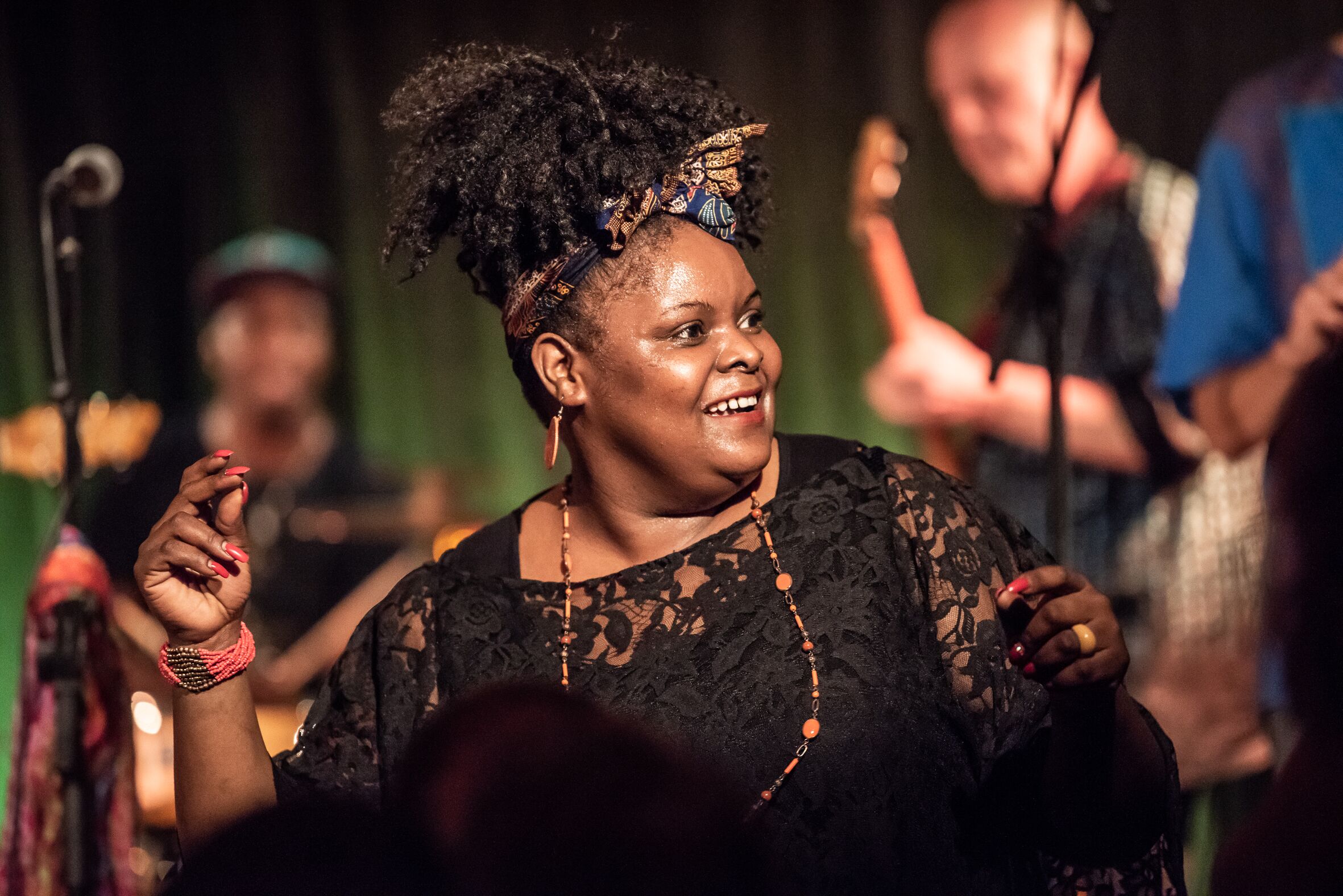
That night, as the last notes of her encore faded, the applause felt different. It wasn’t just for the infectious grooves or the stunning vocals. It was a recognition of the entire circle.
We were applauding the artist, the entrepreneur, the activist, the woman who carries the Kenyan sun in her voice and uses its light to build futures back home.
Claudia Masika is more than a musician. She is a storyteller, a bridge between worlds, and a living testament to the power of art to create tangible, beautiful change.
As the future of music increasingly runs through Africa, her career offers a powerful blueprint: a model of how to conquer the world without losing your soul, how to innovate without forgetting your roots, and how to ensure that when you rise, you lift your community with you.