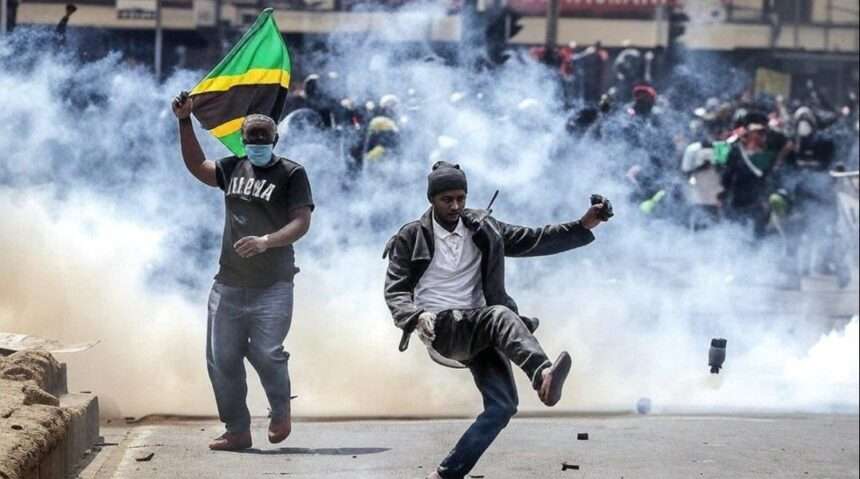
Five days after bloody protests erupted over the disputed presidential election, social media platforms remain restricted in Tanzania, even though internet access has been partially restored.
Digital watchdog Netblocks, which monitors cybersecurity and internet governance worldwide, confirmed the restoration on Monday but noted continued blocking of key communication platforms.
“Live metrics show widespread restrictions to multiple social media and messaging platforms as #Tanzania comes back online after a five-day internet shutdown,” Netblocks said in a post on X (formerly Twitter).
The organization added that the disruptions have continued to limit election transparency and restrict the free flow of information across the country.
Internet Restored After Suluhu’s Swearing-In
Internet restoration followed President Samia Suluhu Hassan’s swearing-in for a second five-year term on Monday, days after she was declared the winner of the highly contested election held last week.
Her inauguration took place at State House in Dodoma, marking a departure from past ceremonies traditionally held in large stadiums.
Suluhu, who took office in 2021 following the death of former President John Magufuli, reportedly secured 98 percent of the votes — a result the opposition has strongly rejected as fraudulent.
Opposition Leaders Barred and Protests Erupt
Major opposition candidates, including Tundu Lissu of the CHADEMA Party and Luhaga Mpina of the Alliance for Change and Transparency (ACT-Wazalendo), were barred from participating in the election.
The bans sparked nationwide protests, during which human rights groups reported numerous casualties and dozens of arrests.
Eyewitnesses and activists allege that security forces used live ammunition to disperse demonstrators in Dar es Salaam, Arusha, and Mwanza.
Calls for Transparency and Calm
Civil society organizations and regional observers have urged Tanzanian authorities to restore full internet access, including to social media and messaging apps such as WhatsApp, Facebook, and X, to allow open communication and independent verification of election results.
“Without access to information, it is difficult for citizens to hold their leaders accountable or to verify what’s true,” one observer from the East African Civil Forum said.
Background
The 2025 general election has been marred by allegations of vote rigging, violence, and media suppression, echoing concerns raised in the 2020 polls.
Despite the unrest, Suluhu’s government maintains that the election was free and fair, urging the public to focus on “unity and development.