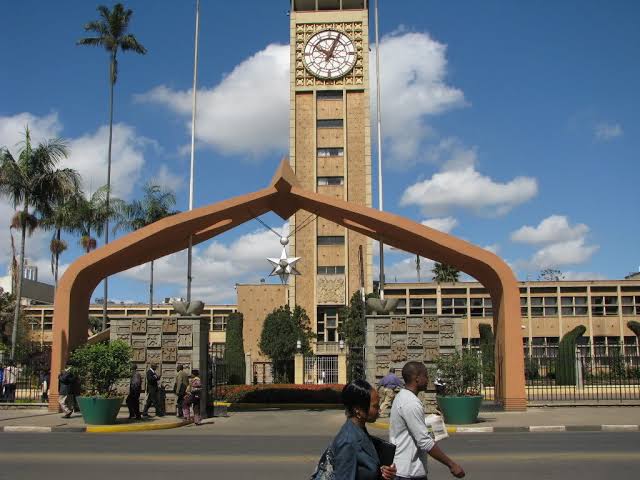
All eyes will be on parliament today as Mps vote from the controversial Finance Bill that is set to raise taxes to an already overburdened Kenyan population.
Today, the bill is set for the Committee of the Whole house stage, where the whole House will seat in the form of a Committee to consider the Bill clause by clause.
At the Committee of the whole House stage, any proposed amendments to be Bill and a vote taken on each.
Last week the controversial bill sailed through the Second Reading stage with 176 Members of Parliament supporting it against 81 who opposed it.
President William Ruto who has a clear majority in the house through Kenya Kwanza has insisted that the bill must pass in its totality.
According to him, the bill which includes a housing tax pegged at one per cent of formal sector workers’ gross pay, would cushion the country from external debt, now hovering at about Sh9 trillion.
“We should choose to either emulate Mwai Kibaki — who expanded the tax-base and raised sufficient funds to grow the economy — or take the route of handshake regime that incurred external debts. We have chosen the route of taxation,” he said, even as he took a swipe at critics of the legislation, accusing them of misleading the public on the proposed taxation measures, which will go through the Third Reading in Parliament tomorrow.
The President admitted that the cost of living had reached alarming rates but that the only way to reverse the situation was to empower farmers to boost food production. To this end, he said, the government had enlisted five million farmers into the fertiliser subsidy programme through which 3.5 million bags of affordable fertiliser have been released in a to enhance production.
“It is true that many Kenyans are suffering due to the harsh economic times,” the President said, acknowledging the high cost of living that has affected citizens. “But we will not solve the situation by wearing sufurias on our heads. We should invest in our farmers to enhance food production”. He made the remarks at the Milimani Anglican Church of Kenya in Kakamega town, Lurambi constituency, when he attended a Sunday service and presided over a fundraiser.
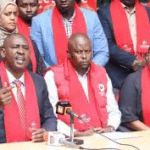
The opposition says that the Finance Bill, which suggested a slew of tax increases, is unpopular among Kenyans.
“We oppose the burden being imposed on working people through reckless measures like house levy, income tax and taxes on per diem. We oppose increased taxes on start-ups and small businesses. We oppose increasing taxes on fuel which will raise the cost of the product by at least Ksh10,” said the coalition in a statement released two weeks ago.
“Azimio is of the view that this Finance Bill takes us back to the 1980s. It takes us back to the era of cost-sharing in public institutions. It takes us back to the era of Structural Adjustment Programs. It takes us back to the 1980s because the people who were in charge back then, are in charge today,” read the statement in part.
According to the Azimio the Kenya Kwanza government sought to extract billions from Kenya’s poorest citizens while expecting the opposition to rejoice.
“We take the position that the budget proposals offer completely no support for working people and upcoming businesses, for the taxes being levied, people are getting nothing in return.”
The Finance Bill 2023 has 84 clauses and seeks to amend the following laws: the Income Tax Act (Cap. 470); the Value Added Tax Act (No. 35 of 2013); the Tax Appeals Tribunal Act (No. 40 of 2013); the Excise Duty Act (No. 23 of 2015); the Tax Procedures Act (No. 29 of 2015); the Miscellaneous Fees and Levies Act (No. 29 of 2016).
Other clauses are: the Unclaimed Financial Assets Act (No. 40 of 2011); the Statutory Instruments Act (No. 23 of2013); the Betting, Gaming and Lotteries Act (Cap, 131), the Kenya Roads Board Act, 1999, the Kenya Revenue Authority Act, 1995, the Employment Act, 2007 and the Retirement Benefits (Deputy President and Designated State Officers) Act (No. 8 of 2015)
The amendments proposed to the above laws provide a raft of tax policy measures which aim at yielding additional revenue of Sh 211 billion for the Fiscal Year 2023/24 which is part of the Sh2.571 trillion projected revenues for the year.
At least 10 amendments to the Finance Bill have been lined up, with eight of them being proposed by the opposition while two are from legislators allied to the government side.