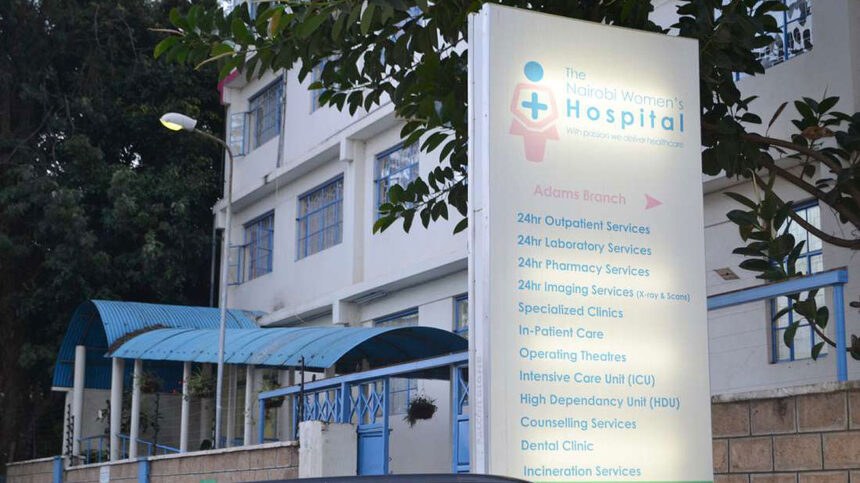
The 2023 Oxfam report, titled “Sick Development,” reveals that Nairobi Women’s Hospital’s major stakeholder, Abraaj Growth Health Markets Fund (AGHF), received funding from various organizations including Germany’s DEG, France’s Proparco, and the World Bank’s IFC.
Despite receiving investments from these institutions, the report alleges that Nairobi Women’s Hospital engaged in human rights violations and financial exploitation of patients instead of subsidizing the cost of health services.
The report highlights cases of patient detention, including instances where patients’ bodies were held over unpaid bills. The report also mentions a secondary school boy who was detained for almost a year in 2018 due to an outstanding bill. A court ruled that the hospital had acted unlawfully and violated the Kenyan Constitution by detaining the boy.
In defense of the institution, the Hospital’s CEO, Dr. Sam Thenya, stated that the institution had revised its policies after the court ruling.
However, the Oxfam report reveals that cases of patient detention were still being recorded in 2019. In addition, leaked internal communications from 2018 exposed pressure from senior hospital managers to increase admissions and delay discharges in order to meet income targets.
Patient sues hospital for detention
In 2018, another patient, Ms Emmah Njeri accused the hospital of detaining her after the hospital failed to agree on her payment proposal. She claimed that her detention, from May to October 2018 had separated her from her toddler, who was missing her motherly upbringing. She further stated that the detention was in breach of her constitutional rights and freedom.
Ms Njeri claimed the hospital charged her Sh5,000 for every day she was staying in the hospital after her discharge date. She noted that the bill had risen to Sh4,029,429 as of October 10, 2018.
“The petitioner as at the time of discharge had accumulated hospital bills of Sh3,140,144. She had already paid a sum of Sh1,351,510 and offered proposals to offset the balance. The respondent rejected the proposals. The respondent then proceeded to unlawfully and illegally detain her at the hospital premises while continuing to levy unreasonable and unjustified charges,” said Ms. Njeri in court documents.
She claimed to have accumulated an extra cost of Sh889,000 since her supposed date of discharge. The hospital in a letter signed by its credit officer on August 9, 2018, noted that the outstanding bill stood at Sh2.35 million, but a second letter dated October 10 from the same facility showed that the bill had by then grown to 2.67 million.
The Oxfam report raises concerns about the inadequacy of due diligence, oversight, and monitoring mechanisms for investments by development finance institutions. It also calls for concrete and systematic scrutiny of investments to prevent similar cases from occurring in the future.
Dr. Thenya argues that the fund was an investor, not a donor, and considers it a commercial transaction. He suggests that investigations should target the fund and hold individual shareholders or investors accountable. He states that they should solely focus on the hospital as a profit-making business entity.