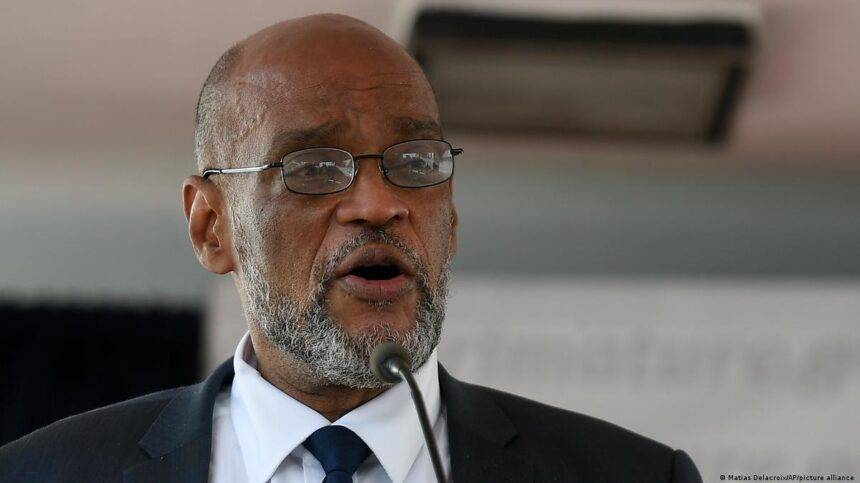
During their fact-finding tour in Haiti, a Kenyan security delegation engaged with Haiti’s Prime Minister Ariel Henry, key members of his government, and leaders of the High Council of the Transition.
This crucial engagement precedes the imminent dispatch of 1,000 Kenyan police officers, part of an international police force organized to counteract the rampant gang violence that has severely impacted the Caribbean nation.
Kenya is set to take the lead in this international endeavor, aimed at addressing the deteriorating security situation in Haiti. The delegation’s primary objective is to comprehensively comprehend the security challenges that have beset the nation.
As part of their assessment, the delegation also met with the top officials of the Haitian National Police (PNH) to discuss the existing security situation and the vulnerabilities within the agency. Among those met was Police Chief Frantz Elbe.
Reports from the Haitian media reveal that the Kenyan team was taken on a tour of the capital, Port-au-Prince, as well as other locations affected by gang-related activities.
The international police force is intended to provide much-needed assistance to Haiti’s understaffed and resource-limited police department, which currently only consists of around 10,000 officers tasked with safeguarding a population exceeding 11 million.
George Orina, an official from the Ministry of Foreign Affairs, articulated the mission’s purpose, stating, “We are here to assess the requirements of Haiti’s National Police, gain a deeper understanding of the situation, and extend our best efforts to support the people of Haiti.”
Deputy Inspector General of the Administration Police, Noor Gabow, leads the Kenyan delegation, which had previously engaged with various countries and groups in New York to deliberate on the most effective ways to aid Haiti.
The Kenyan officials conveyed that the entities they interacted with understood the urgency of Haitian demands and the necessity to address a situation that has paralyzed the country’s operations, imperiling the well-being of its citizens.
Following the Kenyan assessment, a proposal for deploying a security force to Haiti will undergo approval through a vote at the UN Security Council.
Prime Minister Ariel Henry of Haiti has committed to holding elections once security is reestablished. He emphasized the importance of enabling the unhindered movement of people and goods, drawing lessons from prior missions in Haiti.
A government statement highlighted that Kenyan troops possess extensive experience, having served in regions such as Kosovo, Yugoslavia, Sierra Leone, East Timor, Somalia, Sudan, and Angola.
Other nations within the region have also pledged to contribute their police officers to augment the force, aiming to create a robust contingent of 2,000 personnel.
In an expression of gratitude, Prime Minister Henry of Haiti acknowledged a conversation with President William Ruto on August 7, recognizing Kenya’s demonstration of fraternal solidarity.
Haiti is grappling with an upsurge in gang violence amid a profound crisis encompassing security, politics, and humanitarian concerns. Human Rights Watch and Amnesty International have advocated for the multinational force to incorporate safeguards to prevent potential abuses.