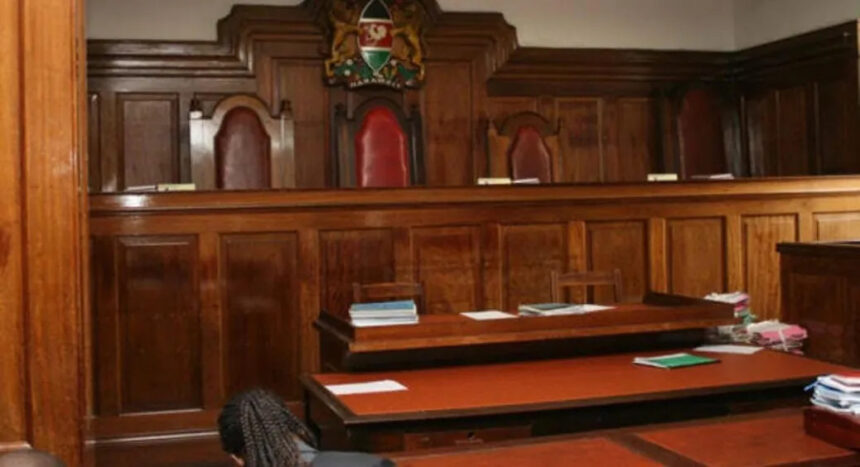
In a recent court ruling after a four-year investigation and public inquest, the Makindu law court in Makueni County has declared that the Kenya Wildlife Services (KWS) officers who fatally shot 17-year-old student Benedict Kyule in Tsavo National Park in 2019 acted legally.
The court stated that the young man’s unfortunate demise was his own doing as he was found inside a protected area.
“My findings are that I didn’t find any omissions or unlawfulness in the use of excessive force by the three KWS officers. It is unfortunate that the deceased caused his own misfortune and unfortunate demise inside Tsavo National Park in the wee hours of the morning,” the Makindu Senior Principal Magistrate Benson Nyaga Ireri ruled.
At the time of the incident, Kyule was a candidate for the Kenya Certificate of Secondary Education (KCSE) exams at Kiuani Secondary School in Kibwezi East.
The inquest, led by the Makindu Senior Principal Magistrate aimed to determine whether there was enough evidence to prosecute three KWS officers. The three officers who were stationed at Mtito-Andei, were on duty when Kyule was shot.
Court findings
The court’s verdict was based on several key findings:
- The incident took place in the Komboyoo area of Tsavo National Park, and there were 11 witnesses, including the deceased’s father and four officers, who testified in the public inquest.
- The court suggested that Kyule was inside the park in the company of unidentified poachers who might have fled during a shootout.
- Four spent cartridges from a .303 rifle and a homemade gun allegedly used by the poachers were found at the scene. However, there was no direct link between the homemade gun and the deceased student.
- The officers testified that while on patrol in the Komboyoo section of Tsavo West, they heard gunshots fired in their direction at around 3 a.m. They claimed to have taken cover and returned fire to protect their lives and the wildlife.
- The court concluded that it did not find any unlawfulness or excessive use of firearms in the officers’ actions. The magistrate emphasized that the deceased caused his own misfortune and unfortunate death in the park during the early hours of the morning.
- The court questioned why Kyule was inside the park during the early morning hours and suggested that he was a frequent visitor who often hunted dik-diks. Given the darkness at the time of the incident, the court believed that the rangers acted lawfully to protect their lives and wildlife.
Student died due to excessive bleeding due to gunshot wounds
Kyule’s father expressed dissatisfaction with the ruling, arguing that his son had no knowledge of using firearms.
“My son was such a staunch Christian. He was more into education. Therefore, if he had no knowledge of using local bows and arrows how could he use a gun?” Muli stated.
The family’s lawyer, Mutinda Kimeu, stated that they were dissatisfied with the decision and planned to appeal in the high court.
“The officers acknowledged to have killed the boy. There was no connection between the gun recovered and the deceased. Justice has therefore not been served. We will appeal in the high court,” said Kimeu
A post-mortem report from Makindu Sub-County Hospital revealed that Kyule died from excessive bleeding resulting from gunshot wounds to the chest.