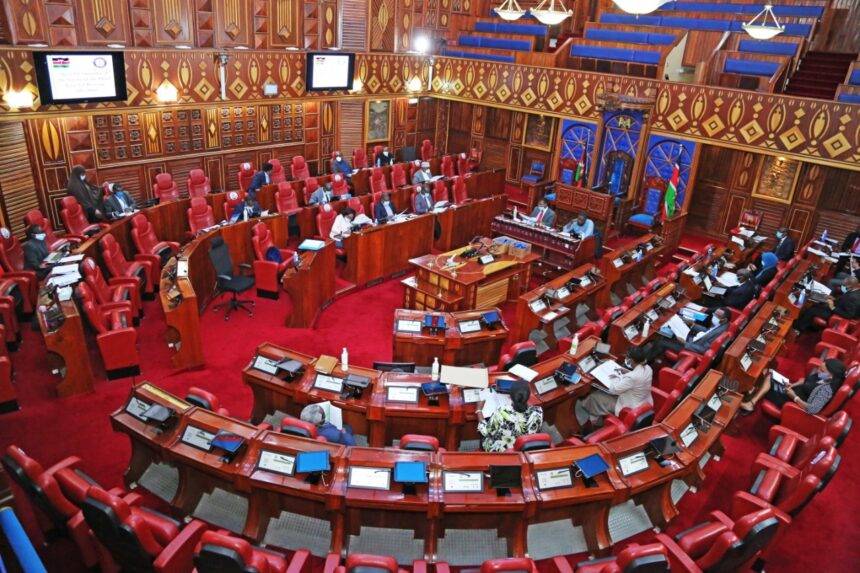
The Senate on Tuesday passed the Affordable Housing Bill, clearing the path for it to reach President William Ruto’s desk for approval.
In a notable triumph for the Kenya Kwanza government, the bill, despite facing staunch opposition, garnered 27 votes in favor and only 10 rejections from senators. Notably, there were no abstentions recorded during the proceedings.
The breakthrough occurred following Senate Majority Leader Aaron Cheruiyot’s motion for the legislation to undergo a third reading, ultimately securing its passage through the chamber.
Earlier, the bill encountered legal challenges, with the High Court in Kisumu intervening in the process. However, the court’s ruling absolved Parliament of any wrongdoing in conducting public participation regarding the bill, thereby clearing the path for the Senate’s consideration of the legislation without impediment.
“The court’s ruling validates the comprehensive approach taken by Parliament in ensuring public participation,” remarked Majority Leader Kimani Ichung’wah. “It underscores the necessity of effective engagement with the public in shaping legislation that impacts their lives.”
The Affordable Housing Bill aims to formalize a 1.5 percent housing levy on both salaried and income-earning Kenyans, with the objective of generating funds for nationwide affordable housing initiatives. Despite facing contentious moments, including a mass walkout by opposition MPs, the bill had previously passed through the National Assembly.
In its judgment, the High Court emphasized the crucial role of robust public participation in the legislative process, emphasizing its significance in prioritizing people-centered developments and legitimizing government actions.
Lawrence Omule Apiyo, acting as the petitioner in the court case, had challenged the adequacy of public participation in the bill’s formulation. However, the court ruled in favor of the National Assembly, affirming that effective and constitutionally compliant public engagement had been conducted.
“The court’s ruling affirms that the public had ample opportunity to contribute to the development of this legislation,” stated Apiyo. “While we may have had concerns about the process, it’s clear that the court has validated Parliament’s efforts in this regard.”
The Affordable Housing Bill is now set to be presented to President Ruto for his signature, after which it will become law.