
Kenyans have been urged to ignore political distractions and continue registering for Taifa Care, even as concerns mount over its effectiveness in delivering quality healthcare.
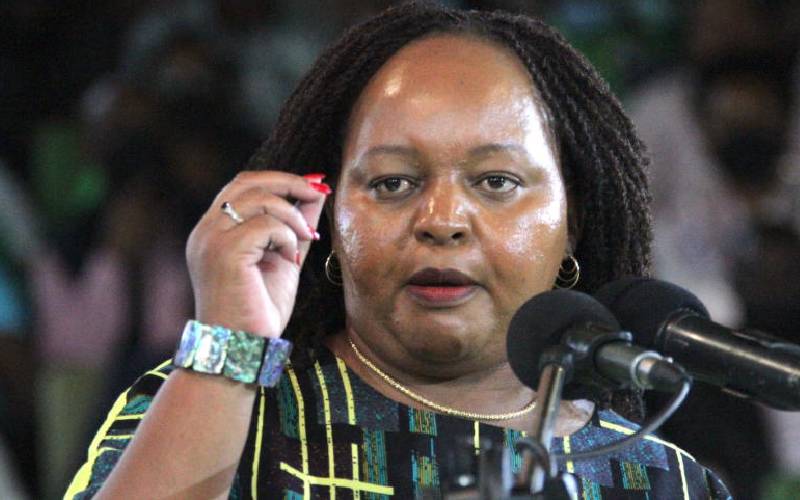
Kirinyaga Governor Anne Waiguru has defended the new health scheme, dismissing critics as politicians who “have their own covers yet they are telling you not to register.”
Speaking at an event distributing digital devices, Waiguru praised Taifa Care’s role in revolutionizing healthcare and improving efficiency in service delivery.
“If they want to know if Taifa Care is working or not, then they should come to Kirinyaga and see for themselves what Taifa Care agenda is doing,” she said.
According to Waiguru, the system allows real-time monitoring of hospitals, ensuring better resource allocation.
She also highlighted the county’s improved revenue collection in health facilities, which has surged from KES 130 million to over KES 200 million, with projections hitting KES 300 million by June.
This, she attributed to Taifa Care and Social Health Authority (SHA) repayments, though she acknowledged pending bills remain an issue.
SHA Faces Mounting Criticism
Despite the government’s assurances, the rollout of SHA and Taifa Care has been met with skepticism from Kenyans, healthcare professionals, and patients alike.
Many are confused about the relationship between SHA, NHIF, and Taifa Care, with unclear communication fueling uncertainty about benefits, enrolment, and access to healthcare.
Concerns raised include:
✅ Limited Coverage: Many essential treatments and medications are not covered, forcing patients to pay out-of-pocket.
✅ Poor Service Delivery: Overcrowded hospitals, long wait times, and understaffing persist.
✅ Technical and Bureaucratic Failures: The transition from NHIF has left many unsure how or where to access healthcare services.
✅ Corruption and Mismanagement: Cases of delayed or denied payments to hospitals have raised fears of a broken system.
Many Kenyans have reported that even after registering with SHA, they still face high costs for medical services that are not covered by the scheme. This defeats the purpose of the health insurance system which was supposed to reduce the financial strain on individuals seeking medical care.
There has been a significant gap in communication between the government, healthcare providers, and the public.
Many Kenyans feel they have not been adequately informed about the details of the new Taifa Care systems, including how to access care, what is covered, and how to address complaints.
This lack of transparency has created uncertainty and led to a sense of alienation among patients and healthcare professionals.
One of the most heartbreaking failures of SHA emerged in the tragic case of a young girl whose medical journey highlighted glaring gaps in the system.
Baby’s Death Exposes SHA’s Shortcomings
On February 23, 2025, a 19-month-old girl, who had previously undergone a successful bone marrow transplant in India, died in a Kenyan hospital.
Diagnosed with Pearson Syndrome—a rare genetic disorder with fewer than 10 known cases worldwide—the baby’s story gripped the nation. Her mother had fought tirelessly to secure her treatment abroad, believing the state would support them under the Social Health Insurance Fund (SHIF).
Despite years of contributions to NHIF, SHA only approved KES 23,600 towards a KES 1.6 million medical bill. The family, already financially strained, was left scrambling to cover the remaining amount.
A senior official at Fortis Memorial Hospital in India confirmed that while the baby’s mother paid in cash, she was hoping SHA would settle the outstanding balance—something that never happened.
In October 2024, Medical Services Principal Secretary Harry Kimtai assured the public that a KES 500,000 claim had been approved for payment. However, due to the transition from NHIF to SHA, this payment never materialized.
So whose fault was it? And why did an innocent baby have to die due to a system issue? Who should carry the blame for this death?
Even after the baby’s death, her mother continued submitting receipts for reimbursement—money she desperately needed for food and rent. But SHA refused, stating there was “no policy to refund individuals directly.”
An Expensive and Broken System?
Baby Arianna’s death plus many other complaints from Kenyans seeking treatment has reignited debate over the effectiveness of SHA and Taifa Care. Many Kenyans now wonder: Is the new system truly solving the country’s healthcare crisis, or is it just another bureaucratic mess?
The procurement of the Social Health Insurance Fund system for Sh106 billion has also sparked significant controversy.
The Auditor General Nancy Gathungu recently revealed key issues that raise integrity concerns in the country as it turns out, procurement of the SHIF system was not done in the right way. As a result, taxpayers may end up losing their money for this new system.
Questions have also been raised on who owns the platform? Is it owned by the government or private players? And why are the payments by Kenyans going to an escrow account? And why is the government entrusting private individuals and companies to manage medical data and information about Kenyans?
Many Kenyans have also questioned why such an expensive system was purchased yet it has failed to function effectively, particularly at critical moments when patients need care the most.
The frequent system failures have led to frustration, as individuals are unable to access the services they need despite the high cost of the new system.
Many have also raised concerns about the decision to implement SHIF instead of upgrading the NHIF system. Upgrading the NHIF system was estimated to cost only around Sh800 million, a fraction of the amount spent on the new SHIF system.
Critics argue that this investment could have been better spent improving the previous system, which already had infrastructure in place, rather than replacing it with a new one that has yet to deliver the promised benefits. This has sparked public outcry, as taxpayers feel that they have been burdened with a costly system that is not providing the expected value or results.
While Waiguru and other leaders insist the program is working, real-life cases tell a different story. With families left stranded and hospitals struggling with unpaid bills, urgent reforms may be necessary to restore public trust in Kenya’s healthcare system.
