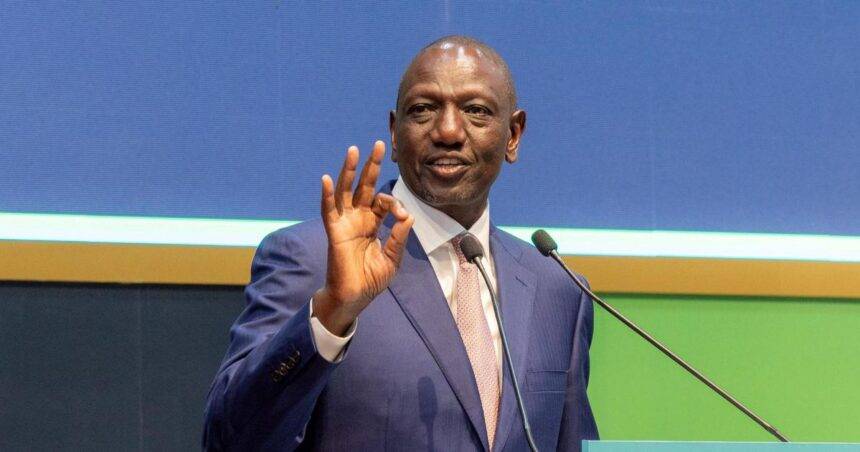
President William Ruto has arrived in Italy to attend the funeral of Pope Francis, following the conclusion of his recent state visit to China. He was welcomed in Rome by National Assembly Speaker Moses Wetang’ula, despite earlier reports that Wetang’ula had been chosen to represent him at the event.
The Vatican has confirmed that Ruto will join 10 other African heads of state and numerous global leaders at the funeral, scheduled for Saturday, April 26. High-profile dignitaries expected include U.S. President Donald Trump, French President Emmanuel Macron, Ukrainian President Volodymyr Zelenskyy, and Prince William.
Speaker Wetang’ula had previously announced on April 24 that he had been nominated by Ruto to lead Kenya’s delegation, during a condolence visit to the Apostolic Nunciature in Nairobi. However, Ruto’s presence in Rome affirms his personal decision to attend the historic ceremony.
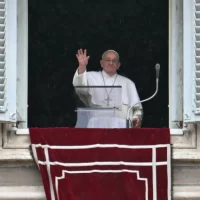
Pope Francis, the first Latin American pontiff, passed away on Easter Monday at the age of 88. His death has been met with widespread mourning across the Catholic world. A week-long period of reflection and tributes will culminate in his funeral at St. Peter’s Square, where tens of thousands of mourners from across the globe are expected to gather.
The funeral Mass will begin at 10:00 a.m., presided over by Cardinal Giovanni Battista Re, Dean of the College of Cardinals. Approximately 250 cardinals, along with numerous bishops, priests, and members of the clergy, will take part in the service. The late Pope’s coffin, made of wood and zinc, was sealed the night before and will be placed on the forecourt of the basilica for the ceremony.
Francis will be buried according to his wishes — not in the traditional papal tombs beneath St. Peter’s Basilica, but in a simpler resting place at the Basilica of St. Mary Major. The basilica holds a special icon of the Virgin Mary, the Salus Populi Romani, to which Francis was deeply devoted.
Before the burial, Vatican officials followed traditional rites, including placing coins minted during his papacy and a brief written history of his time as pope — known as a rogito — inside the coffin. A white cloth was also placed over his face during the sealing ceremony, led by the camerlengo.
With the funeral, the Catholic Church enters nine days of mourning, known as the novemdiales. This period also signals the beginning of the process to elect a new pope, although the date of the conclave has not yet been set.
The election of a new pope involves a secretive vote among the College of Cardinals. Only cardinals under the age of 80 are eligible to vote, and the chosen candidate must receive a two-thirds majority. While any baptized Catholic male can technically be elected, only cardinals have been selected as pope since 1378.
Most of the current voting cardinals were appointed by Pope Francis himself, many of whom share his progressive outlook. Although it remains uncertain who will succeed him, the next pope is likely to carry forward his legacy of humility, social justice, and a focus on the marginalized.