In what experts are calling a “turning point for Africa’s financial credibility,” four African countries — Nigeria, South Africa, Mozambique, and Burkina Faso — have been removed from the Financial Action Task Force (FATF) grey list.
The announcement, made in Paris last Friday, was welcomed as a major milestone for Africa’s two largest economies, Nigeria and South Africa, both of which have spent years trying to rebuild investor trust after being placed under FATF monitoring for weaknesses in their financial oversight systems.
But while these nations celebrate their removal from the global watchlist, Kenya remains grey-listed, with experts warning that continued inaction could erode its reputation as East Africa’s financial hub.
What the FATF Grey List Means
The FATF is the world’s leading anti-money laundering and counter-terrorist financing (AML/CFT) watchdog, setting global standards followed by over 200 countries.
When a country is placed on the grey list, it means FATF has found gaps in its financial monitoring framework — from weak enforcement of money-laundering laws to poor supervision of banking and digital transactions.
While not as severe as being blacklisted, grey-listing sends a signal to global markets that a country poses higher financial risk. It triggers increased scrutiny from international banks, costlier cross-border transactions, and reduced investor confidence.
For economies like Nigeria and South Africa — both battling currency volatility and sluggish growth — grey-listing had become a serious economic handicap.
How the Four Countries Earned Delisting
Over the past year, the four African nations implemented wide-ranging reforms to tighten financial oversight and restore international confidence.
-
Nigeria introduced tougher anti-money-laundering laws, improved coordination between its Financial Intelligence Unit and the Economic and Financial Crimes Commission (EFCC), and strengthened regulation of digital and mobile money platforms.
-
South Africa, recovering from years of corruption scandals and “state capture,” empowered regulators to track suspicious transactions and hold public officials accountable.
-
Mozambique and Burkina Faso enhanced controls over cross-border cash flows linked to armed groups in their regions.
FATF said the countries had shown “substantial effectiveness and political commitment” in implementing reforms but urged them to maintain vigilance to avoid backsliding.
The delisting is more than symbolic — it reduces compliance costs for businesses, reassures investors, and restores credibility in global financial markets.
Why It Matters for Citizens
For ordinary Africans, the effects of delisting go beyond policy circles:
-
In Nigeria, it could translate to cheaper international transactions, increased investor inflows, and possibly a stronger Naira.
-
In South Africa, experts predict lower borrowing costs, job creation, and better consumer protection as anti-corruption systems strengthen.
-
For the region at large, delisting Africa’s top two economies could spark a confidence rebound for neighbours like Ghana, Kenya, and Côte d’Ivoire.
However, economists warn that delisting signals progress — not perfection. Without sustained enforcement, countries risk slipping back into old habits.
Kenya’s Uphill Battle
While its peers celebrate, Kenya remains on the FATF grey list after being re-flagged in February 2024 — ten years after its last listing. FATF cited major deficiencies in Kenya’s ability to detect, investigate, and prosecute money laundering and terrorist financing.
The watchdog found that:
-
Kenya had no successful convictions for money laundering or terrorist financing despite multiple investigations.
-
Beneficial ownership transparency was opaque, allowing politically exposed persons to hide illicit wealth through shell companies.
-
The non-profit sector lacked adequate regulation, exposing it to misuse for terrorism financing.
-
Kenya had weak oversight of non-bank institutions, including SACCOs, real estate firms, casinos, and law firms.
-
The country lacked clear frameworks to monitor virtual assets such as cryptocurrencies.
The grey-listing triggered serious economic consequences.
In June 2025, the European Commission also added Kenya to its list of high-risk third countries, forcing European banks to apply stricter due diligence on Kenyan clients.
This led to increased transaction costs, delayed payments, and discouraged investors.
Ruto’s Reform Response
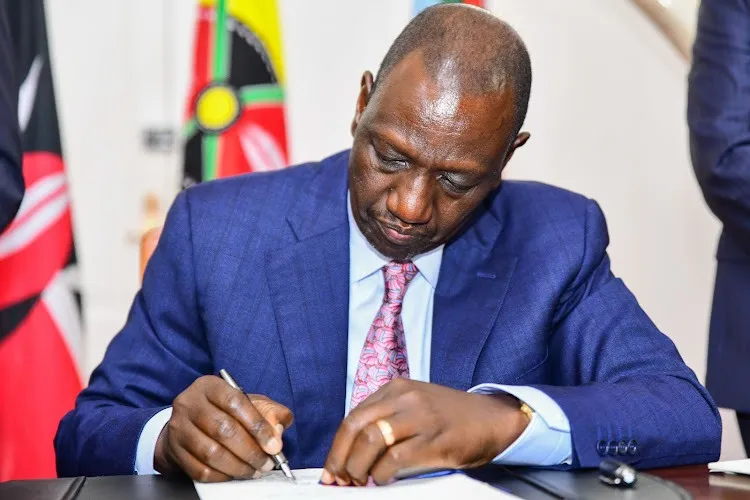
To address these weaknesses, President William Ruto signed the Anti-Money Laundering and Countering of Terrorism Financing Laws (Amendment) Bill, 2025, and the Insurance Professionals Bill, 2024, on June 17, 2025.
The new laws close loopholes in property transactions and shell company ownership, strengthen oversight across sectors like banking, insurance, and betting, and enhance coordination among regulators.
Earlier, Kenya also passed the Anti-Money Laundering and Combating of Terrorism Financing Act, introducing:
-
Stricter know-your-customer (KYC) and enhanced due diligence requirements.
-
Mandatory reporting of suspicious transactions to the Financial Reporting Centre (FRC).
-
Tougher penalties for financial crimes and stronger beneficial ownership transparency.
-
Better cross-border information sharing with international watchdogs.
According to Transparency International, Kenya loses an estimated KSh253 billion annually through illicit financial flows — underscoring the urgency of reform.
The Eastern and Southern Africa Anti-Money Laundering Group (ESAAMLG) noted that Kenya had addressed 29 out of 40 FATF recommendations by mid-2024, reflecting progress but not full compliance.
The Road Ahead
Despite these reforms, analysts argue that Kenya’s biggest hurdle is political will. Enforcement against powerful figures involved in corruption remains inconsistent, while the misuse of AML and terrorism laws to target protesters and critics risks undermining the credibility of reform efforts.
Experts noted that institutions like the FRC and Ethics and Anti-Corruption Commission (EACC) need more resources and independence to act without political interference.
The country will also need to apply the law to the letter without showing favouritism to friends of the regime while targeting the critics.
If Kenya sustains reform momentum and demonstrates tangible enforcement results, experts say it could follow in Nigeria and South Africa’s footsteps — possibly earning delisting in the near future.