Tanzania, a land of breathtaking landscapes and rich biodiversity, is reeling from post-election chaos that has cast a dark shadow over its reputation as one of Africa’s top tourism destinations.
Known for its sprawling Serengeti plains, the majestic Mount Kilimanjaro, the lush Ngorongoro Crater, and pristine coastal forests, Tanzania has long attracted tourists eager to experience its wildlife and natural wonders.
Yet, behind the postcard beauty, the nation now finds itself grappling with violent unrest, curfews, and an internet blackout following a tense general election.
Election chaos
On Wednesday, October 29, 2025, Tanzanians headed to the polls to elect their president, members of parliament, and local leaders.
However, what began as a national exercise in democracy quickly descended into turmoil.
Protests erupted across Dar es Salaam, Arusha, Mwanza, and other major cities after opposition supporters alleged that the vote was rigged in favour of incumbent President Samia Suluhu Hassan.
The United States Embassy in Dar es Salaam issued a warning to its citizens, urging them to stay indoors and avoid unnecessary movement, citing “countrywide demonstrations resulting in outbreaks of violence and roadblocks.”
The advisory added that several major roads — including the one leading to Julius Nyerere International Airport — had been closed, and communication severely disrupted due to a government-imposed internet shutdown.
Streets of Dar es Salaam Turn Hostile
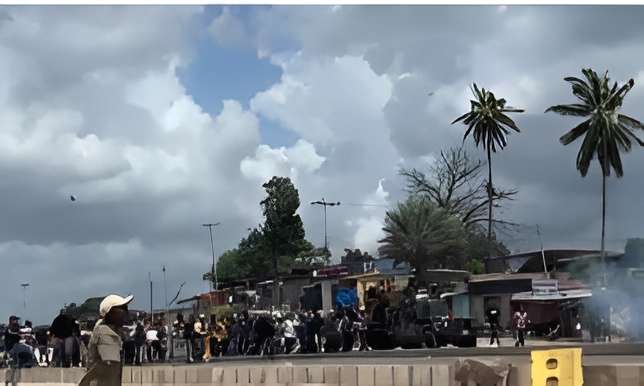
By Thursday morning, police in Tanzania’s largest city fired gunshots and teargas to disperse protesters who had defied curfew orders and returned to the streets.
According to a witnesses, demonstrations broke out again in Mbagala, Gongo la Mboto, and Kiluvya neighbourhoods as security forces struggled to contain the unrest.
Civil servants were ordered to stay home except those providing essential services, while foreign governments, including Britain, confirmed the closure of airports in Dar es Salaam, Arusha, and near Mount Kilimanjaro. Some international flights were also cancelled as the situation worsened.
Witnesses reported multiple casualties, though official numbers remain unclear.
Human rights activist Tito Magoti said at least five people were confirmed dead, while diplomatic sources suggested that as many as 10 people may have been killed in Dar es Salaam alone.
Other reports indicated that up to 30 people could have lost their lives nationwide, though the government has yet to comment.
Hospitals such as Muhimbili National Hospital reported receiving dozens of injured protesters.
Opposition Locked Out, Democracy Questioned
The election has been widely criticised for its lack of competition and suppression of dissent.
The Chama Cha Mapinduzi (CCM) party, which has ruled Tanzania for over six decades, was expected to retain power with ease after key opposition figures were either disqualified or detained.
The Chadema party, led by Tundu Lissu, was barred from participating after refusing to sign a government code of conduct, while ACT-Wazalendo’s candidate Luhaga Mpina was also disqualified by the electoral commission.
Lissu remains in detention facing treason charges, and his party has called the election a “coronation” rather than a contest.
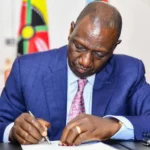
President Samia Suluhu Hassan, who took power in 2021 following the death of John Magufuli, was initially praised for easing political tensions and reopening civic space.
However, rights organisations say that progress has since reversed, with reports of abductions of critics, restrictions on journalists, and a crackdown on opposition voices.
Rising Global Concern
International observers and rights groups, including Amnesty International and Human Rights Watch, have condemned the heavy-handed response to the protests and the nationwide internet blackout, calling it an attempt to silence dissent and block the free flow of information.
A diplomatic source told AFP that despite a curfew, unrest continued overnight in several cities, with police and army checkpoints set up around Dar es Salaam.
Foreign nationals — including Kenyans — are among those trapped by the chaos. While Washington and London have issued advisories, Nairobi has yet to release an official statement regarding the safety of its citizens in Tanzania.