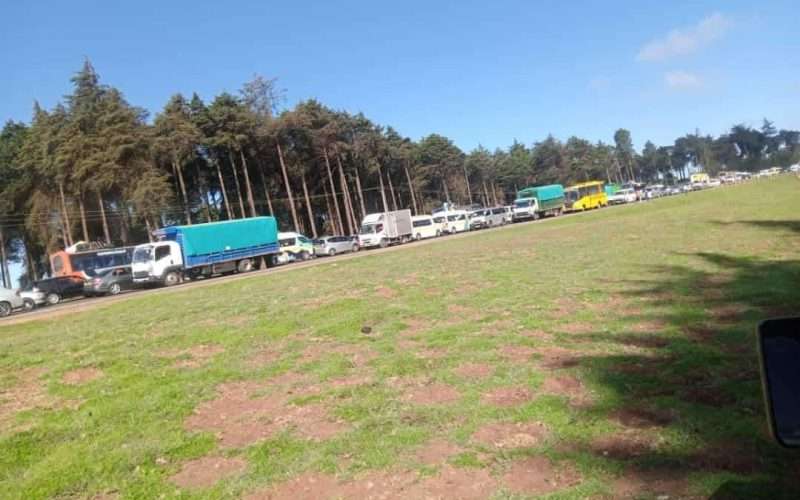
President William Ruto has confirmed that construction works to dual the 170-kilometre Rironi–Naivasha–Mau Summit highway will officially kick off on November 28, 2025 — a major step toward easing one of the country’s most notorious bottlenecks along the Northern Corridor.
The President announced the date after meeting China Communications Construction Company (CCCC) President Zhang Bingman at State House, Nairobi.
He described the long-awaited project as a “transformative step” that will unlock smoother transport and faster trade between Nairobi and western Kenya.
According to Ruto, turning the highway into a dual carriageway will finally bring relief to motorists who have endured years of traffic jams, delays, and frequent accidents on the busy stretch.
“The dualling of the 170km Rironi–Naivasha–Mau Summit road begins on November 28, 2025,” he said. “This will herald a major milestone for this critical part of the Northern Corridor, facilitating movement, boosting trade and ending decades of agonising congestion and disastrous accidents.”
The President also revealed that on the same day, ground will be broken for the 58-kilometre dualling of the Rironi–Maai Mahiu–Naivasha road. The upgrade is expected to strengthen transport links to Kenya’s southern regions and spur new economic activity.
Both projects will be constructed by China Road and Bridge Corporation (CRBC), a subsidiary of CCCC.
Ruto praised Kenya’s long-standing partnership with China, saying Chinese-backed infrastructure has been pivotal in opening up the country.
He cited key projects including the Standard Gauge Railway, the Nairobi Expressway and numerous national road networks.
Other ongoing China-supported developments under the Kenya Kwanza government include Talanta Sports City, 21 new stadiums, the Bomas Convention Centre, and the Lamu–Ijara–Garissa road.
The President added that more major projects are planned under the government’s long-term agenda, among them the extension of the railway to Kisumu and Malaba and construction of the proposed Galana Dam in Tana River County.
The Rironi–Naivasha–Mau Summit dual carriageway is considered one of East Africa’s most strategic infrastructure investments and is expected to significantly cut travel time, ease freight movement and enhance cross-border commerce once complete.
A Toll Road Under a 30-Year Concession
The National Treasury selected the China Road and Bridge Corporation–NSSF Consortium to build and operate the highway through a public-private partnership (PPP). The road will be tolled under a 30-year concession, and toll revenues will enjoy a 30-year tax exemption.
The toll rate — which will increase by 1% annually — was a major factor during the tender evaluation. However, the government says final charges may still be negotiated to ensure motorists are not overburdened.
“GoK should negotiate a competitive toll tariff,” the project brief notes.
The project will be financed through a mix of 75% debt and 25% equity in Kenyan shillings, with NSSF’s participation marking one of the largest local investments in road infrastructure. Importantly, the consortium will absorb traffic and revenue risks, meaning taxpayers will not shoulder losses if toll income falls short.
How Kenya Profits From Toll Roads
Kenya earns revenue from toll roads primarily through PPP arrangements, where private firms build and operate the roads and collect tolls to recover their investment. The government benefits by:
1. Sharing or collecting toll revenue
A portion of toll income supports new infrastructure and helps plug funding gaps in the roads budget.
2. Reducing maintenance pressure on the Exchequer
Toll revenue is channelled to dedicated road development and maintenance funds.
3. Attracting private capital
Investors recover costs and generate profits — for example, the Nairobi–Mau Summit highway is projected to deliver operating profits of up to KSh 339.8 billion over its concession period.
Existing and upcoming toll road examples include the Nairobi Expressway and the Rironi–Mau Summit Expressway. The government is also considering tolling major highways such as Thika Road to ensure stable maintenance funding.