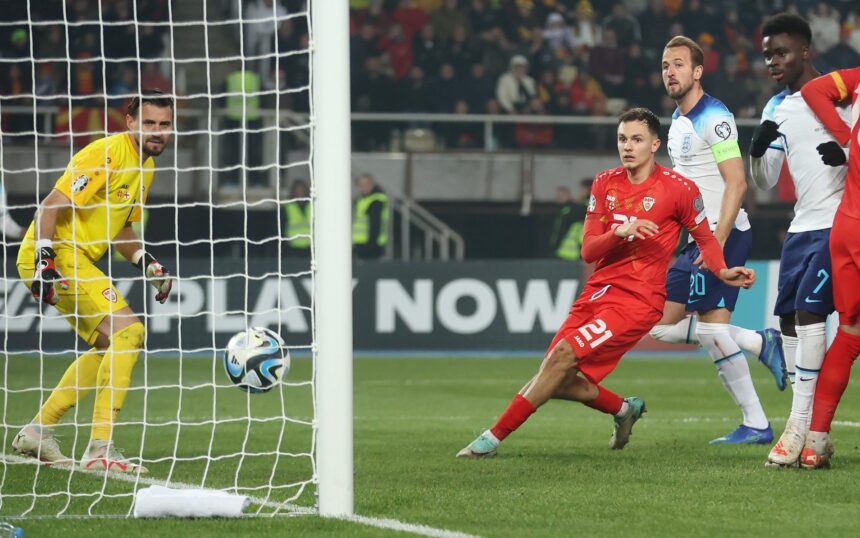
For decades, football had a problem it could not elegantly solve: what happens when a knockout match ends in a draw?
Before the modern penalty shootout, the answer often felt arbitrary—sometimes even absurd. Matches were decided by replays, coin tosses, or even drawing lots, methods that left players, officials, and fans deeply dissatisfied.
Today’s penalty shootout, now one of the most dramatic spectacles in sport, emerged as a deliberate attempt to replace luck with skill.
The Era of Chance and Replays
In the early and mid-20th century, knockout matches tied after extra time were typically replayed. While this worked in domestic competitions, it posed logistical challenges in international tournaments with tight schedules.
When replays were not feasible, football resorted to chance. One of the most famous examples came during the 1968 UEFA European Championship. After a 0–0 draw between Italy and the Soviet Union, progression to the final was decided by a coin toss—won by Italy.
Italy would go on to draw 1–1 with Yugoslavia in the final and eventually win 2–0 in a replay two days later, underlining how inconsistent tie-breaking methods could be.
Other unusual methods were also used across competitions. Some tournaments counted corner kicks, while others even allowed teams to share titles. None of these approaches fully satisfied the fundamental principle of fair competition.
The “Final Straw” in 1968
The tipping point came later that same year at the 1968 Olympic football tournament. In a quarter-final match between Israel and Bulgaria that ended 1–1, the winner was determined by drawing lots.
Israel’s captain picked a slip of paper marked “no” from a hat—reportedly a sombrero—confirming their elimination. The incident sparked outrage within Israeli football circles, where officials viewed the method as unjust and unworthy of the sport.
Among those frustrated was Yosef Dagan, who believed football needed a more skill-based solution. Alongside Michael Almog, he developed the concept of a structured penalty shootout.
The Birth of the Penalty Shootout
In 1969, Dagan and Almog formally submitted their proposal to FIFA. The idea was simple but revolutionary: instead of relying on chance, each team would take five penalty kicks, alternating turns. If still tied, the contest would continue in sudden death.
Almog strongly criticized existing methods in the proposal, describing drawing lots as “immoral and even cruel” for the losing team, and lacking honour for the winner.
The proposal sparked significant debate within football’s rule-making circles. Ultimately, the concept gained traction as a fairer and more practical alternative.
Official Adoption and Global Impact
The turning point came on 27 June 1970, when the International Football Association Board (IFAB) officially approved the penalty shootout at its annual general meeting in Inverness, Scotland.
From that moment, football had a standardized mechanism to resolve drawn knockout matches—one that combined individual skill, psychological pressure, and team strategy.
The first major international tournament to feature penalty shootouts was the 1976 UEFA European Championship, where Czechoslovakia famously defeated West Germany in the final via penalties, with Antonín Panenka introducing his iconic chipped kick.
Why Penalties Endured
Penalty shootouts quickly became embedded in football culture for several reasons:
- Fairness: Unlike coin tosses, outcomes are determined by player execution.
- Practicality: Eliminates the need for replays in congested tournament schedules.
- Drama: The high-pressure, one-on-one format captivates global audiences.
Despite ongoing debates about whether shootouts truly reflect team performance, they remain widely accepted as the best available solution.
A Shift from Luck to Skill
The evolution from coin tosses and drawn lots to penalty shootouts represents a fundamental shift in football’s philosophy—from randomness to merit.
What began as frustration over a sombrero draw in 1968 ultimately reshaped the sport. Today, when matches are decided from the penalty spot, the outcome may still feel cruel—but it is no longer arbitrary.