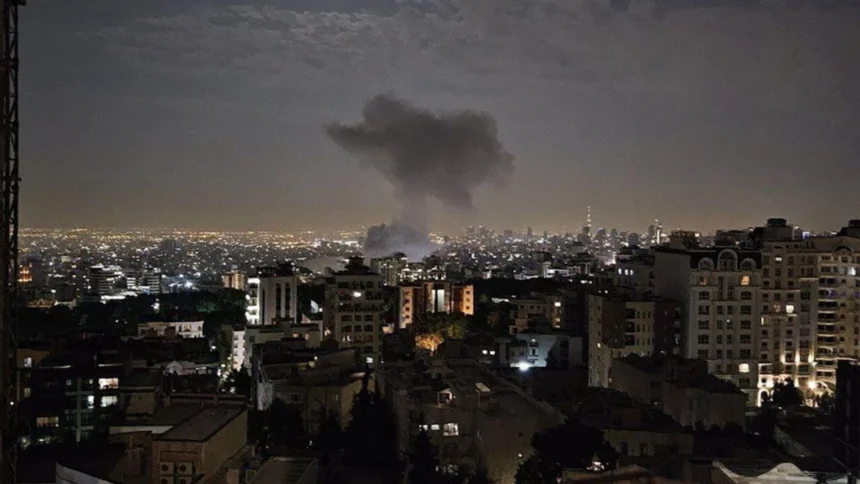
The Iran-aligned Houthi movement in Yemen has confirmed launching a missile attack on Israel, marking its first direct strike since the escalation of the ongoing conflict involving Iran, Israel, and the United States.
The group, officially known as Ansar Allah, said it fired a barrage of ballistic missiles targeting what it described as “sensitive Israeli military sites.”
The Houthis framed the attack as retaliation for strikes affecting Iran and its regional allies, including Lebanon, Iraq, and Palestinian territories, warning that further operations would continue until what they termed “aggression” ceases.
Israel’s military, the Israel Defense Forces, confirmed intercepting at least one missile launched from Yemen, preventing it from reaching its intended target.
A New Front in an Expanding Conflict
The Houthi strike signals a potentially dangerous expansion of the conflict, opening a southern front near the Red Sea—one of the world’s most critical shipping corridors.
Analysts warn that the involvement of Yemen-based fighters could further destabilize an already volatile region.
The Houthis have previously demonstrated their ability to disrupt global trade.
Since late 2023, they have carried out repeated drone and missile attacks on commercial vessels transiting the Red Sea, forcing major shipping companies to reroute around the Cape of Good Hope—a significantly longer and more expensive journey.
The group has also targeted Western military assets.
In early 2024, Houthi forces launched attacks against US and British naval vessels, prompting retaliatory strikes by both countries and the deployment of additional maritime security forces.
Roots of the Iran-Israel Escalation
The current escalation traces back to longstanding tensions between Iran and Israel, which have played out for decades through proxy conflicts across the region.
These tensions intensified dramatically following the October 7 attacks, when Hamas militants launched a large-scale assault on Israel, triggering a major Israeli military response in Gaza.
Iran, a key backer of groups such as Hamas and Hezbollah, condemned Israel’s actions and increased its rhetorical and strategic support for allied militias.
Over time, the conflict broadened beyond Gaza. Armed groups aligned with Iran—including Hezbollah in Lebanon and militias in Iraq—began engaging Israeli and US-linked targets. Direct confrontations between Iran and Israel also escalated, with both sides accused of launching strikes on each other’s assets.
The growing involvement of the United States, largely in support of Israel and in defense of regional shipping lanes, has further raised the stakes, turning what was once a proxy confrontation into a more direct geopolitical standoff.
Strategic Risks: Red Sea and Strait of Hormuz
The Houthis’ entry into the conflict has amplified fears over global energy and trade routes. The Red Sea, already under strain from repeated attacks, could face renewed disruptions.
At the same time, tensions have also affected the Strait of Hormuz—a critical transit route where several tankers have reportedly come under attack. Any sustained disruption in this corridor could have significant implications for global oil supply and prices.
The Yemen Factor
The Houthis’ involvement is rooted in Yemen’s long-running conflict. Since 2014, the group has controlled large parts of north-western Yemen, including the capital, Sanaa, after ousting the internationally recognised government and triggering a protracted civil war.
Over the years, the Houthis have strengthened ties with Iran, receiving political backing and, according to Western officials, military support. This alignment has increasingly positioned them as a key player in Iran’s broader regional strategy.