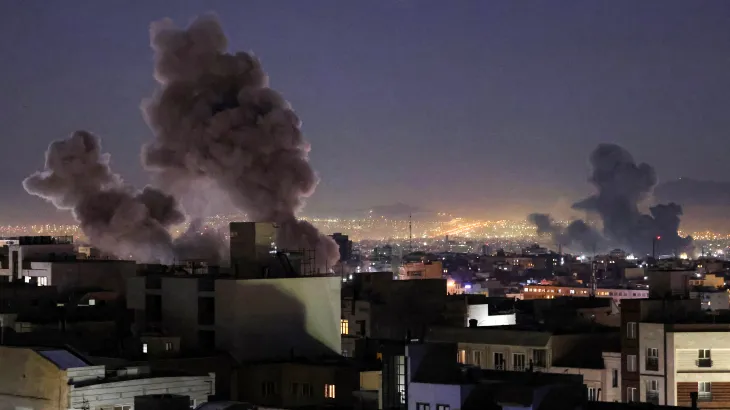
A rapidly escalating conflict between Israel, Hezbollah, and Iran is continuing to send shockwaves across the Middle East and global markets, raising fears of wider economic fallout that could significantly affect countries far beyond the war zone — including Kenya and the wider East African region.
In recent days, Israeli airstrikes in Beirut and southern Lebanon have killed dozens, while Iranian missile attacks have struck multiple locations across the region.
Explosions have been reported in Bahrain and Dubai, and a suspected drone attack targeted a British military base in Cyprus.
Inside Israel, an Iranian missile strike killed nine people in Beit Shemesh, while the United States confirmed that three of its service members have died in the expanding conflict.
The violence intensified further after a major strike reportedly killed Iran’s Supreme Leader, Ali Khamenei — a development that analysts say could dramatically reshape regional power dynamics.
Iran insists its attacks are aimed at US military presence rather than neighbouring countries, but missiles and drones have hit airports, ports, and civilian infrastructure across Gulf states, deepening regional instability.
Global oil shock underway
The most immediate global impact has been on energy markets. Oil prices surged by more than 10% when Asian markets opened, driven by fears that the conflict could disrupt shipping through the strategic Strait of Hormuz – a vital route that carries about one-fifth of the world’s oil supply.
Several ships have already been attacked near the strait, while many tankers have halted movement due to security risks.
Analysts warn that if the conflict drags on or the shipping route remains blocked, global oil prices could climb past $100 per barrel.
What this means for Kenya and East Africa
Although the fighting is far away geographically, the economic ripple effects are expected to hit East Africa quickly and directly.
Fuel prices: Kenya imports nearly all its petroleum products, much of which is priced based on global crude markets. A sustained oil price spike would likely translate into higher pump prices, pushing up transport costs and the overall cost of living.
Inflation pressures: Rising fuel costs typically trigger increases in food prices, electricity tariffs, and manufacturing expenses — putting additional strain on households already facing high inflation.
Trade disruptions: Middle Eastern airspace closures and shipping delays could disrupt cargo routes connecting East Africa to Europe and Asia, slowing imports and exports. This could affect sectors such as horticulture, manufacturing inputs, and consumer goods supply chains.
Diaspora remittances risk: Many East Africans work in Gulf countries like the United Arab Emirates and Saudi Arabia. Prolonged instability could threaten jobs, remittances, and worker safety.
Tourism and aviation: Airspace closures across the Gulf — a major transit hub — are already disrupting flights, which could impact tourism flows and cargo transport to East Africa.
A conflict with global consequences
Experts warn that the crisis risks becoming a prolonged regional war with global economic implications.
Beyond the humanitarian toll in the Middle East, the biggest immediate concern for countries like Kenya is the economic shock – particularly higher fuel costs, supply chain disruptions, and inflationary pressure.
Most factories in Kenya rely on diesel-powered machines while most citizens use fuel-powered vehicles to go about their daily business. An increase in oil prices or a shortage of oil could impact many day-to-day activities.
If the fighting continues or expands further, the conflict could reshape global energy markets and trade patterns, making its impact felt far beyond the battlefronts — including in households and economies across East Africa.