Tanzanian President Samia Suluhu Hassan has directed government agencies to scale down fuel consumption, rolling out austerity measures aimed at cushioning the country against rising global fuel prices.
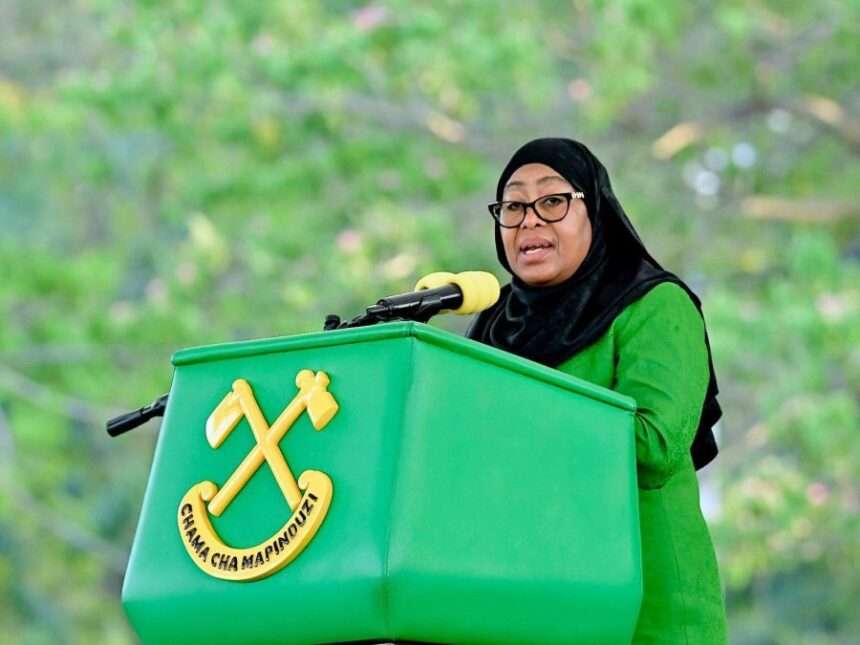
Speaking on Wednesday at Chamwino State House, the president said the government must lead by example as the country grapples with increased fuel costs driven by global supply disruptions.
Government to Lead by Example
Dr Samia announced that the austerity measures would begin at the highest level, including her own office, with significant reductions in travel and official convoys.
“Within the government, we have many vehicles and frequent travel. We must now reduce this,” she said.
Under the new directive, the president’s motorcade will be limited to four vehicles, while accompanying officials will be required to share transport, including the use of a single bus for delegations.
Global Crisis Driving Fuel Costs
The move comes amid a surge in global oil prices linked to geopolitical tensions, including the ongoing crisis involving the United States, Israel, and Iran, which has disrupted supply chains.
Tanzania has already felt the impact, with fuel prices rising sharply. The Energy and Water Utilities Regulatory Authority recently announced an increase of about Tsh1,000 per litre of petrol, reflecting global market pressures.
Despite the spike, President Samia noted that Tanzania remains relatively better positioned compared to some neighbouring countries, with comparatively lower fuel prices.
Warning to Businesses
The president also cautioned traders against exploiting the situation to unjustifiably hike prices of goods already in stock.
“Let us be fair to wananchi. Goods that were stocked earlier should not be used as an excuse to raise prices,” she said.
However, she acknowledged that newly imported goods may become more expensive due to increased transportation and logistics costs linked to higher fuel prices.
Call for Global Stability
Dr Samia emphasised that the situation is part of a broader global challenge, calling for international efforts to restore stability and normalise trade flows.
“These are global developments. Even as leaders, we continue to call for peace so that trade and the movement of oil and goods can return to normal,” she said.