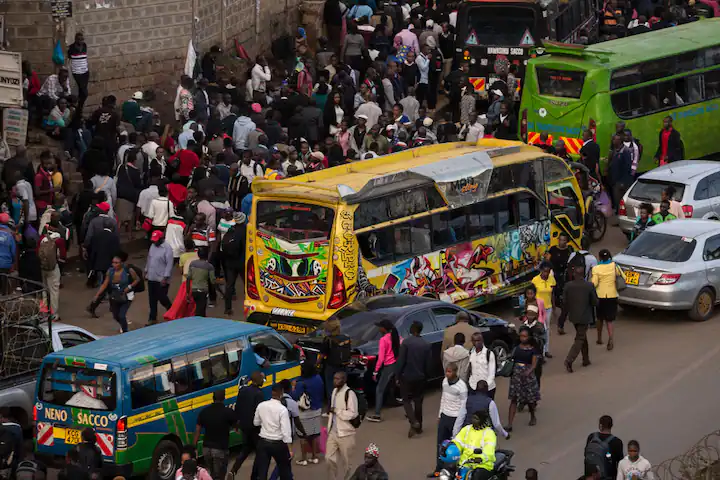
Millions of Kenyans could face major transport disruptions from Monday after matatu operators announced a nationwide strike in protest against the latest fuel price increases.
The strike, led by the Matatu Owners Association, is expected to paralyse public transport services across the country, with operators also directing an immediate 50 per cent increase in fares.
Association chairman Albert Karakacha said the public transport sector could no longer absorb the rising operational costs caused by soaring fuel prices.
Speaking on Friday, Karakacha warned that all public service vehicles would remain off the roads on Monday unless the government addresses the industry’s concerns.
He said operators had repeatedly received promises from the government, but little had been done to ease the pressure facing the transport sector.
According to the association, the 50 per cent fare increase is necessary to keep vehicles operating after the sharp rise in diesel and petrol prices announced by the Energy and Petroleum Regulatory Authority (EPRA).
Under the latest fuel review covering May 15 to June 14, 2026, EPRA increased diesel prices by Ksh46.29 per litre while Super Petrol rose by Ksh16.65 per litre.
Motorists in Nairobi will now pay Ksh214.25 for petrol and Ksh242.92 for diesel, while kerosene prices remain unchanged.
EPRA attributed the adjustments to rising global oil prices and higher importation costs for refined petroleum products.
The regulator maintained that the current pricing formula is intended to help recover importation costs while shielding consumers from extreme market fluctuations.
Fuel prices play a central role in Kenya’s economy, directly affecting transport costs, food prices, electricity generation and the overall cost of goods and services.
Earlier, Energy Cabinet Secretary Opiyo Wandayi said the government would use approximately Ksh5 billion from the Petroleum Development Levy Fund to cushion consumers from the rising fuel prices.
According to Wandayi, the subsidy intervention was meant to stabilise diesel and kerosene prices amid mounting pressure from global crude oil prices, freight costs and geopolitical tensions in the Middle East.
However, matatu operators insist the government intervention is insufficient and warn that the latest fuel hikes have pushed the industry to a breaking point.
If the strike proceeds, millions of Kenyans who rely on public transport daily could be severely affected.
Commuters in major towns and cities, especially Nairobi, may struggle to get to work, school and business premises, forcing many to walk long distances during peak hours.
Long-distance travel routes connecting Nairobi to regions such as Nakuru, Kisumu and Mount Kenya could also face major disruptions if transport operators suspend services.
Businesses are also expected to suffer significant losses due to delayed workers, absenteeism and reduced operating hours.
The strike could further disrupt supply chains if truck operators and transporters join the demonstrations, potentially affecting the movement of food supplies, medical products and wholesale goods across the country.
Ride-hailing and transport network companies are also likely to come under pressure as demand for alternative transport surges alongside the proposed fare increases.
The looming strike now adds to growing public concern over the rising cost of living, as Kenyans continue to grapple with increased fuel prices and inflationary pressure across multiple sectors of the economy.