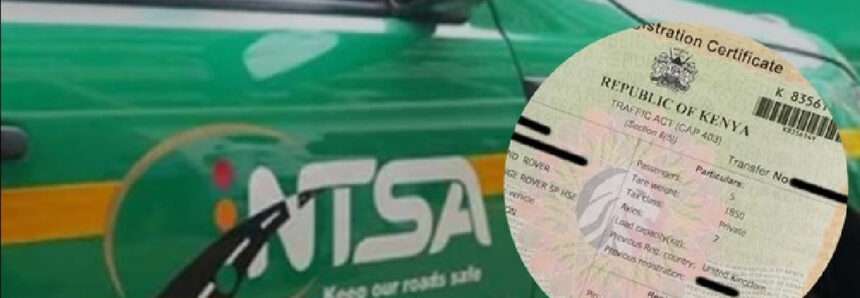
National Transport and Safety Authority has announced that vehicle owners in Kenya will stop using physical logbooks as the country transitions to a fully digital e-Logbook system.
The new e-Logbooks will officially be rolled out on June 10, 2026, through the eCitizen platform.
According to NTSA, the move is aimed at replacing the current paper-based registration system, which the authority says is vulnerable to fraud, delays and human error.
The authority stated that the new system will provide a real-time digital registry with stronger security controls and automated vehicle record management.
Under the new arrangement, vehicle ownership records will be generated instantly through the NTSA portal, allowing information updates to reflect immediately in the system.
“This eliminates the risk of using an outdated paper logbook and reduces fraud during private vehicle sales,” NTSA said.
The authority added that the e-Logbooks will use digital encryption and secure hashing technology to reduce cases of forgery and fraudulent ownership documents that have long affected the transport sector.
Each digital logbook will also feature a dynamic QR code that can be scanned by buyers, insurers, banks and SACCOs to instantly verify ownership and authenticity.
NTSA noted that the new system will simplify vehicle financing by enabling financial institutions to directly confirm ownership and lien status electronically without requiring physical files.
“Banks and SACCOS can directly verify ownership and lien status via the NTSA system, reducing the need for physical file copies and speeding up loan approvals for vehicle financing,” the authority said.
The transition will also allow vehicle transfers to be initiated and completed online without visiting NTSA offices.
In addition, motorists are expected to benefit from automated reminders for renewals and compliance requirements, while law enforcement agencies will be able to verify vehicle details electronically in real time.
NTSA further said police and inspection units will have live access to vehicle ownership records, insurance validity, stolen vehicle status and inspection history.
The authority believes the digital system will strengthen compliance enforcement, improve recovery of stolen vehicles and reduce fraud across the transport industry.