Kenya has been added to Financial Action Task Force’s (FATF) ‘grey list,’ a classification that triggers increased monitoring by the global anti-money laundering watchdog.
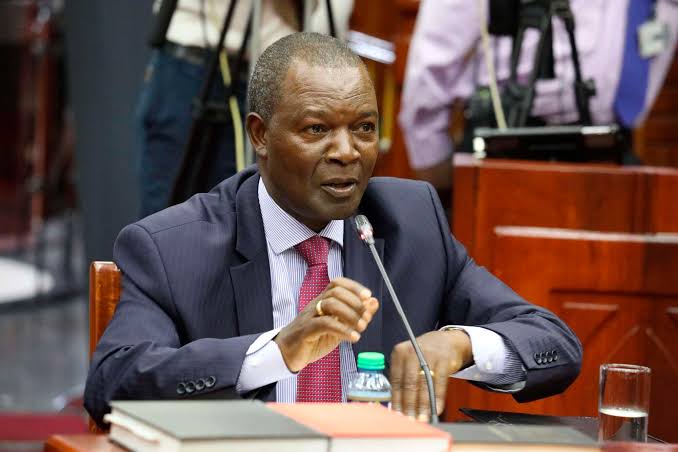
This move, as announced by Treasury CS Njuguna Ndung’u, signifies a closer examination of Kenya’s adherence to international standards in Anti-Money Laundering, Countering the Financing of Terrorism, and Proliferation of Weapons of Mass Destruction (AML/CFT/CPF).
The decision comes after Kenya’s response to an assessment conducted by the South African anti-money laundering group ESAAMLG in 2022 resulted in mixed reactions.
In response, the Kenyan government initiated a series of interviews and measures to enact legal and regulatory reforms and institutional actions.
Ndung’u acknowledged that while Kenya demonstrated compliance in certain areas, it encountered challenges in others.
“One significant achievement was the enactment of the AML/CFT (Amendment) Act, 2023, which involved a comprehensive overhaul of existing legislation,” Ndung’u noted.
A significant milestone in addressing deficiencies identified in the Mutual Evaluation Report (MER) was the enactment of the AML/CFT (Amendment) Act, 2023.
This legislative reform consisted of 17 amendments, showcasing a comprehensive overhaul of existing legislation.
Ndung’u highlighted the alignment of the Prevention of Terrorism (Implementation of the United Nations Security Council Resolutions on the Suppression of Terrorism) Regulations, 2022, with the amended Act.
“As a country that has witnessed the devastating effects of terrorism and money laundering, Kenya reaffirms its dedication to combating money laundering, terrorism financing, and proliferation risks,” he elaborated.
Subsequently, the Prevention of Terrorism (Implementation of the United Nations Security Council Resolutions on the Suppression of Terrorism) Regulations, 2023, were published and gazetted on October 6, 2023.
Furthermore, all regulatory agencies, including the Central Bank of Kenya, strengthened their AML/CFT measures by developing new supervision manuals and conducting risk-based inspections to enforce compliance with the Act.
Noteworthy interventions involved designating lawyers as reporting entities under the Proceeds of Crime Act and the Anti-Money Laundering Act, essentially making the Law Society of Kenya a self-regulatory body.
Ndung’u emphasized Kenya’s unwavering commitment to comprehensively implementing the FATF Action Plan.
He highlighted the active participation of the National Treasury, aiming to minimize adverse effects on the country’s financial stability and the cost of doing business in Kenya.
Acknowledging Kenya’s experience with the devastating effects of terrorism and money laundering, Ndung’u reiterated the country’s dedication to combating these issues.
He affirmed that the government would spare no effort in addressing identified deficiencies and working towards a swift exit from the ‘grey list.’