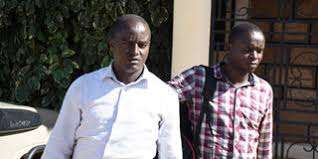
A bribery case against a Judiciary officer is collapsing spectacularly after the Ethics and Anti-Corruption Commission (EACC) admitted losing Ksh. 50,000 in exhibit money the very evidence it used to parade the suspect as corrupt six years ago.
In a stunning admission, EACC has now written to the Director of Public Prosecutions (DPP) begging him to withdraw the case, essentially conceding it bungled the investigation from the start.
The man at the centre of the saga is Moses Gitonga, a Judiciary staffer who worked at Marimati Law Courts in Tharaka Nithi. In 2019, EACC loudly trumpeted his arrest on social media, accusing him of soliciting and pocketing a bribe to manipulate a defilement case. Those posts have since mysteriously vanished.
Gitonga was dragged to court on four counts of bribery and abuse of office. Several witnesses took the stand. But when it came time to produce the crucial Ksh. 50,000 exhibit, the commission could not trace it. Like the missing social media posts, the cash had simply evaporated.
Senior EACC official Mogare Oira admitted as much in a letter to the DPP:
“The hearing of this case has not progressed since the fifth witness was stood down due to unavailability of the money exhibit, which could not be located during the trial… In view of the above, we are of the opinion that your esteemed Office consider withdrawal of the case.”
That is bureaucratic spin for what ordinary Kenyans would call a disaster. Without the money, the case is dead on arrival. And yet it has dragged for nearly six years, wasting judicial time and taxpayer resources.
The irony is rich. Only weeks ago, EACC boss David Oginde and CEO Abdi Mohamud sat before senators, blasting the DPP for dropping graft cases without consulting them. “The Constitution has given those powers to the DPP. He can do whatever he wants with a case,” Mohamud told the Senate. Now the commission is on its knees asking the very same DPP to pull the plug.
This fiasco lands at a time when President William Ruto is rallying a special multi-agency team to restore faith in Kenya’s graft war. But how can the public trust institutions that lose exhibit money like pocket change?
Kenyans are told corruption is the “biggest threat to prosperity.” Yet here is a textbook example of why high-profile cases collapse: sloppy investigations, vanishing evidence, and institutions more concerned with optics than convictions.
For Gitonga, the case is likely over. For EACC, the bigger trial may be public opinion — and the verdict is already damning.