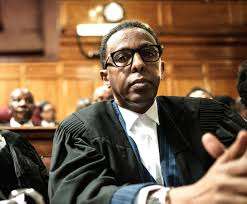
The Supreme Court of Kenya has lifted a restriction that barred Senior Counsel Ahmednasir Abdullahi from appearing before the apex court, allowing him to resume practice after a two-year sanction.
In a ruling delivered on January 23, 2026, a bench comprising Chief Justice Martha Koome, Deputy Chief Justice Philomena Mwilu, and Justice Smokin Wanjala ruled that Ahmednasir, members of his law firm, or advocates holding his brief may now appear before the Supreme Court, including in matters currently before it.
“It is our determination that Senior Counsel Ahmednasir Abdullahi, an employee of his law firm, any other person holding his brief, or acting pursuant to his instructions, may from the date of this ruling appear and practise before the Supreme Court of Kenya and specifically in respect of the proceedings herein,” the judges stated.
The decision followed an oral application by Senior Counsel Paul Muite and Senior Counsel Fred Ngatia, who were appearing as lead counsel for advocates representing Nguruman Limited. The two senior lawyers urged the court to lift the sanction imposed in January 2024, arguing that it had served its purpose.
They submitted that the two-year period had allowed for reflection and a renewed appreciation of the relationship between the bench and the bar, which they described as being founded on mutual respect and responsibility in upholding the rule of law.
Ahmednasir was barred from appearing before the Supreme Court in January 2024 after the judges recused themselves from cases involving him or his firm, citing conduct that they said undermined the court’s authority and dignity. The court then directed that he would have no audience before it, either personally or through advocates acting on his instructions.
In further submissions, Muite and Ngatia told the court that sufficient time had passed for introspection and assured the bench that Ahmednasir would henceforth engage with court decisions through respectful and objective scholarly discourse.
Ngatia argued that the circumstances that led to the sanction were now largely historical and cautioned against continued reliance on past conduct.
The Attorney General’s office, through counsel holding brief, left the matter to the court’s discretion, urging the judges to make an appropriate determination and offer guidance where necessary.
In its ruling, the Supreme Court acknowledged the seriousness of the issues that led to the initial restriction but noted that the passage of two years was a significant factor. The judges said they were persuaded that the period had given Ahmednasir adequate opportunity to reflect on his conduct and his relationship with the judiciary.
However, the court clarified that while Ahmednasir is now allowed to appear before it, the January 2024 order itself was not vacated.