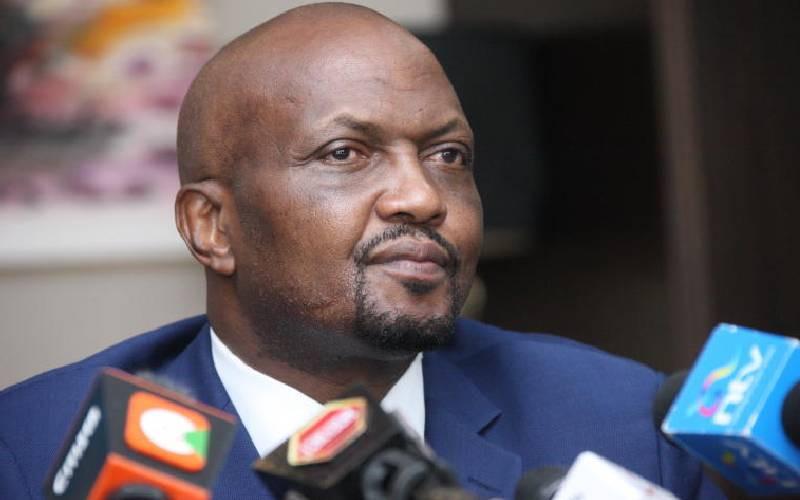
Moses Kuria, President William Ruto’s Senior Advisor in the Council of Economic Advisors, has drawn parallels between Kenya’s upcoming 2027 presidential election and the country’s historic multi-party polls of 1992 and 1997.
In a post shared on his official X (formerly Twitter) account on the night of Monday, May 5, 2025, Kuria suggested that despite the passage of time, Kenya’s political landscape remains unchanged—still defined by backroom deals and fierce power struggles.
“The more things change, the more they remain the same. The 2027 presidential election will have the same intrigues and outcomes as both the 1992 and 1997 presidential elections. I was in the heart of both, so I know,” he wrote.
Kuria hinted that he would provide deeper insights during an upcoming TV interview, where he plans to unpack the historical comparisons and their implications for Kenya’s political future.
His comments are likely to intensify political discourse as the country inches closer to the next general election.
This is not the first time Kuria has shared his views on the 2027 race. Earlier in May 2025, he warned of the severe fiscal challenges awaiting the next president. In another post on X, Kuria questioned whether presidential hopefuls truly grasp the enormity of Kenya’s economic burdens.
“Sometimes I wonder whether people who want to be President of Kenya know what they would be getting into,” he wrote. Citing the 2025–2026 budget estimates, he revealed that Ksh1.3 trillion out of the Ksh4.2 trillion budget will go toward debt servicing and pensions—non-negotiable obligations that limit fiscal flexibility.
Kuria further stated that an additional Ksh1.7 trillion is allocated to recurrent expenditure, including Ksh680 billion in civil service salaries, which he described as unsustainable.
“You can’t reform it because jobless Kenyans will take to the streets to defend the civil servants who continue to eat everything at the expense of the rest of Kenyans,” he added.
His assessment paints a grim picture of Kenya’s economic state, with over 93% of the national budget tied up in fixed costs, leaving little room for development or transformative governance.