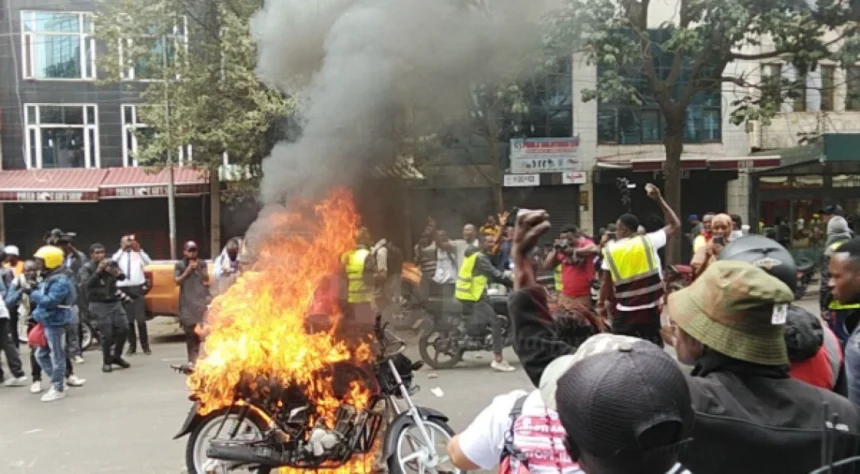
Tension gripped the streets of Nairobi’s Central Business District on Tuesday, June 17, as protests demanding justice for Albert Ojwang entered their second week.
Hundreds of demonstrators, many of them youth, flooded the city centre waving Kenyan flags and carrying placards bearing Ojwang’s name and image. The protesters gathered in defiance of a heavy police presence, calling for accountability over the 27-year-old’s death while in police custody.
The situation turned chaotic outside Nation Centre, where a group of demonstrators had gathered for prayers before proceeding with the protest. Police moved in swiftly, dispersing the crowd with tear gas. Pedestrians and commuters were forced to flee as canisters filled the air, briefly paralyzing activity in the area.
At the same time, major roads leading into the CBD—including Mombasa Road, Thika Superhighway, and Jogoo Road—were heavily manned by anti-riot officers, with security forces on high alert for possible escalations.
Meanwhile, in Mombasa, similar protests were held in the city centre, where demonstrators also demanded justice for Ojwang. However, the coastal demonstrations remained peaceful. Police in the region maintained a watchful distance and did not interfere with the gathering.
The late Ojwang, whose death sparked nationwide outrage, has become a symbol of alleged police brutality in Kenya. Demonstrations have now expanded into a wider movement demanding systemic reforms and an end to extrajudicial killings..