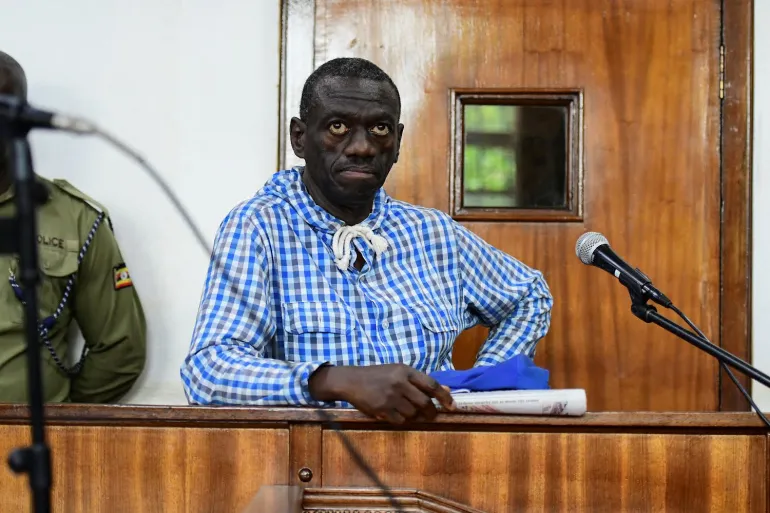
Ugandan opposition leader Kizza Besigye has boycotted the start of his treason trial, accusing the presiding judge of bias.
Besigye, 69, a long-time rival of President Yoweri Museveni, refused to appear in court on Monday alongside co-accused Obeid Lutale. Their lawyer, Erias Lukwago, told AFP that the two believe they cannot receive a fair hearing under Judge Emmanuel Baguma, whom they accuse of bias for denying them bail.
“They have applied for the judge to recuse himself but he refused, and they have decided not to appear until another judge is appointed,” Lukwago said.
Background of the Case
Besigye was abducted in Kenya in November 2024 before being taken back to Uganda, where he now faces treason charges carrying the death penalty. International human rights groups have strongly condemned the charges as politically motivated.
The trial was initially set for February 2025 but has faced multiple delays. Rights groups argue that Besigye’s detention has already exceeded Uganda’s six-month legal limit for holding suspects without trial. However, Judge Baguma ruled that the detention period began only in February when charges were formally read, rather than when Besigye was abducted. His lawyers have described the ruling as “absurd.”
Political Tensions Ahead of Elections
The case comes months before Uganda’s January 2026 election, where President Museveni, 80, is expected to seek another term after nearly 40 years in power. Critics say the trial is an attempt to weaken opposition voices.
In June, Besigye’s wife, Winnie Byanyima, executive director of UNAIDS, condemned his detention as “political persecution” and described prison conditions as “inhumane.”
Besigye’s trial was initially conducted in a military court before being moved to a civilian court after the Supreme Court declared it unconstitutional to try civilians in military tribunals. However, President Museveni later signed a controversial new law reinstating military trials for civilians under “exceptional circumstances.”
What’s Next?
The boycott raises uncertainty about how the trial will proceed, with calls from rights groups and the international community urging Uganda to uphold fair trial standards.