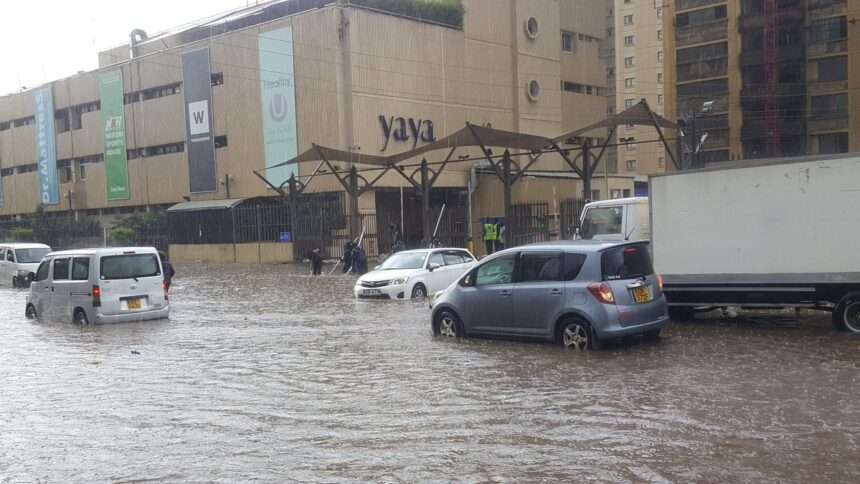
Heavy evening rains triggered widespread flooding across several parts of Nairobi, leaving major roads submerged and disrupting transport in the capital.
The downpour, which began earlier in the evening, quickly overwhelmed drainage systems in multiple neighbourhoods including Nairobi West, South C and South B. In many areas, rising water levels covered entire sections of the road, making them impassable for motorists.
Drivers travelling along Uhuru Highway and the Nairobi Expressway were among the worst affected. Videos circulating on social media showed dramatic scenes of vehicles struggling through deep water, with some nearly submerged as floodwaters engulfed parts of the busy highway.
Flooding was also reported in Kilimani and sections of the central business district, where heavy runoff turned streets into streams, slowing traffic and forcing some motorists to abandon flooded routes.
In several areas, commuters were forced to get out of public service vehicles and walk through flooded streets after traffic ground to a halt.
Residents in South C reported that water had entered their homes after drainage systems failed to cope with the sudden surge of rainwater.
Residents Blame Drainage Failures
The flooding quickly sparked frustration among city residents, many of whom took to social media to blame the Nairobi City County Government for persistent drainage problems.
Critics argued that blocked drainage systems, uncollected garbage and rapid urban development without proper infrastructure have made the city increasingly vulnerable to flooding whenever heavy rains fall.
Some residents also called on Johnson Sakaja to prioritise service delivery and address the city’s infrastructure challenges instead of focusing on political battles ahead of the 2027 elections.
Government Orders Emergency Preparedness
As the heavy rains continue across the country, the national government has directed all sub-counties to establish public information desks, emergency response stations and assistance centres to support affected communities.
The directive follows warnings from the Kenya Meteorological Department that intense rainfall is expected to persist in most regions, increasing the risk of flooding, swollen rivers and transport disruptions.
In a statement, Geoffrey Ruku said the Ministry, through the State Department for Special Programmes, is coordinating national disaster preparedness and response efforts during the ongoing weather emergency.
He directed every sub-county to set up rapid response stations in each division to strengthen coordination and provide immediate assistance to affected residents.
“The Ministry urges all Kenyans to remain vigilant and exercise caution, especially on the roads, for their safety and that of other road users. Members of the public are also advised to avoid crossing rivers that may have swollen or broken their banks,” Ruku said.
Counties on High Alert
According to the Meteorological Department, several counties are expected to receive heavier-than-usual rainfall in the coming days.
These include Nandi County, Kakamega County, Vihiga County, Bungoma County, Siaya County, Busia County, Baringo County, Nakuru County, Trans Nzoia County, Uasin Gishu County, Elgeyo Marakwet County and West Pokot County.
Other counties expected to receive heavy showers include Kisii County, Nyamira County, Kericho County, Bomet County, Kisumu County, Homa Bay County, Migori County and Narok County.
Counties in the southeastern region — including Machakos County, Kitui County, Makueni County, Kajiado County and Taita Taveta County — are also expected to experience heavy rainfall.
Along the coast, Mombasa County, Kilifi County, Lamu County, Kwale County and Tana River County have also been flagged for possible heavy showers.
In northern Kenya, the department warned that Marsabit County, Mandera County, Wajir County, Garissa County, Isiolo County, Turkana County and Samburu County could also experience intense rainfall.
Emergency Meeting Planned
Ruku noted that Nairobi has already been severely affected, with some households left stranded or without shelter due to flooding.
To strengthen the national response, the Cabinet Secretary announced that an emergency coordination meeting will be held on Saturday with key agencies including the National Police Service, National Youth Service, Kenya Red Cross and St. John Ambulance Kenya.
The meeting will also involve the National Disaster Management Unit, the National Disaster Operations Centre and the National Drought Management Authority as authorities move to strengthen emergency response efforts across the country.