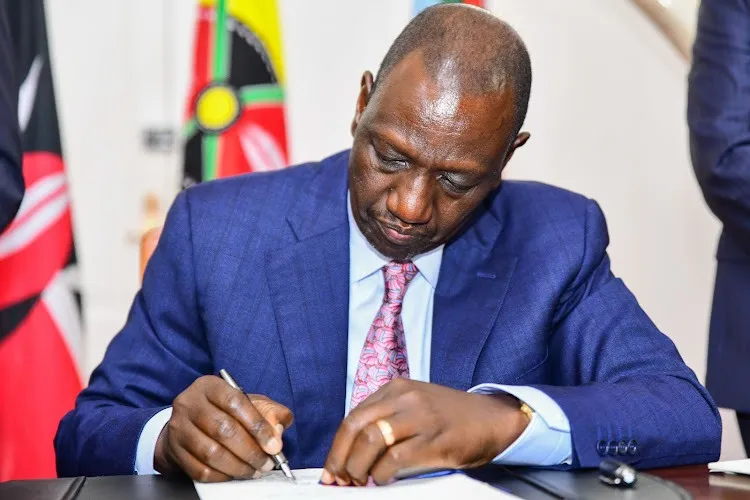
President William Ruto has defended his decision to sign into law the Computer Misuse and Cybercrimes (Amendment) Bill, 2024, on October 15, 2025—the same day former Prime Minister Raila Odinga passed away, saying the move was neither insensitive nor politically motivated.
Speaking during the burial of Weston Kirocho, the father of Inspector General of Police Douglas Kanja, in Thome, Laikipia County, the President dismissed growing criticism from opposition leaders and sections of the public over the timing of the signing.
“I woke up on Wednesday, and the signing was my work for the day—it is a constitutional mandate,” President Ruto said.
“I was to sign because the Bill had passed all stages and had been brought to me by the Speaker. But by bad luck, we lost one of our leaders.”
Ruto Says Timing Was Coincidental, Not Political
The Head of State explained that the signing had been part of his official duties and had already been scheduled before Odinga’s death was announced.
“I was on duty just like any other citizen. There was nothing to hide—I was not doing anything at night,” he clarified.
President Ruto said he later attended a road development event in Ukambani, maintaining that governance responsibilities could not be suspended because of unforeseen tragedies.
New Law Aims to Curb Cyber Harassment and Digital Fraud
Defending the controversial amendments, President Ruto said the new cybercrime law is vital for protecting Kenyans from online harassment, fraud, and extremist propaganda.
“We are doing the right thing for Kenya. We want to protect our young people and the security of our country from situations that undermine our well-being,” he said.
He added that the Computer Misuse and Cybercrimes (Amendment) Act, 2025 strengthens Kenya’s legal framework against digital terrorism and cyberbullying, aligning with global cybersecurity standards.
Public Criticism Over Timing and Content
The signing sparked backlash as it coincided with the mourning period for Raila Odinga, with critics accusing the President of showing insensitivity during a time of national grief.
However, Ruto dismissed the accusations, urging critics to “focus on facts” and avoid politicizing the issue.
“Kenya must stand up to those who are using the digital space to spread terrorism. There are people who want to destroy Kenya by all means,” he said.
The Computer Misuse and Cybercrimes (Amendment) Act, 2025, expands penalties for cyber harassment, phishing, and SIM-swap fraud, with offenders facing fines of up to KSh 20 million or imprisonment for up to 10 years.
The High Court has since suspended enforcement of Section 27 of the Act pending the hearing of a constitutional petition filed by the Kenya Human Rights Commission and Reuben Kigame.