The Orange Democratic Movement (ODM) has formally distanced itself from businessman and political figure Oketch Salah, saying his actions and statements do not represent the party in any way.
In a statement issued by national chairperson Gladys Wanga, ODM said it was compelled to clarify its position after Salah’s recent activities were repeatedly linked to the party in public discussions.
The party stressed that it has neither sanctioned nor endorsed any of his engagements.
ODM said all official party programmes and activities must be conducted through the party secretariat and with the approval of the leadership, led by Oburu Odinga. It warned grassroots leaders and supporters against organising events or making declarations in the party’s name without proper clearance.
The clarification comes amid growing attention around Oketch Salah, a once little-known figure who emerged into the national spotlight following the death of former Prime Minister Raila Odinga.
So who is Oketch Salah?
Oketch Salah (also referred to as Ahmed Jama) is a Kenyan businessman and political operative who rose to sudden prominence in late 2025 following the death of former Prime Minister Raila Odinga.
Salah is the son of the late businessman Abdi Salah from Migori county.
He is frequently nicknamed “Dr. Oketch Salah”. However, reports indicate he has no verified medical degree and the title is used informally or satirically in some circles.
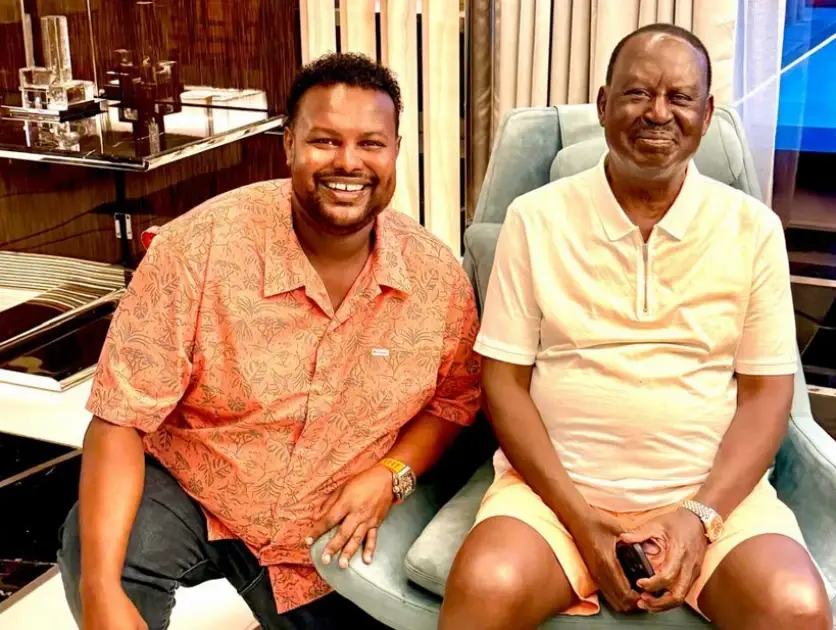
In the hours after Raila’s death was announced, Salah began appearing prominently on social media, sharing videos and photos showing him in close company with the ODM leader during his final days.
The images sparked widespread curiosity and debate, as many Kenyans struggled to understand who he was and how he had become so close to the country’s most influential opposition politician.
Raila had, during his lifetime, publicly introduced Salah at a rally, praising him and referring to him as a close associate. Salah also addressed the crowd on that day, speaking briefly in Dholuo and announcing a KSh1 million donation.
In the weeks that followed Raila’s death, Salah became a constant presence at major political events, funeral planning meetings and public gatherings. He made several statements about ODM’s internal affairs, at times claiming to relay Raila Odinga’s private views and final thoughts on party politics.
Those remarks unsettled many within ODM.
Tensions rose further when Salah publicly claimed that Raila had warned him about senior party figures, assertions that were strongly disputed by ODM officials and members of the Odinga family.
As criticism mounted, Salah defended himself, insisting that he was close to Raila with the leader’s full knowledge and consent. He said he would not disclose private conversations out of respect, but rejected claims that he was seeking relevance or political advantage.
Meanwhile, ODM leaders and Raila’s family have remained cautious and, at times, openly dismissive of his claims. Raila’s daughter Winnie Odinga publicly said that few people truly know Salah, a sentiment echoed by her brother Raila Junior.
Despite continuing to meet high-profile political and regional figures, Salah’s standing within ODM remains unclear. What is clear, however, is the party’s firm position: Oketch Salah does not speak for ODM, and any attempt to present himself as a party voice has now been publicly shut down.
For now, even as he remains visible in political circles, the question that first emerged after Raila Odinga’s death still lingers—who exactly is Oketch Salah, and what role, if any, does he truly play in Kenya’s political future?