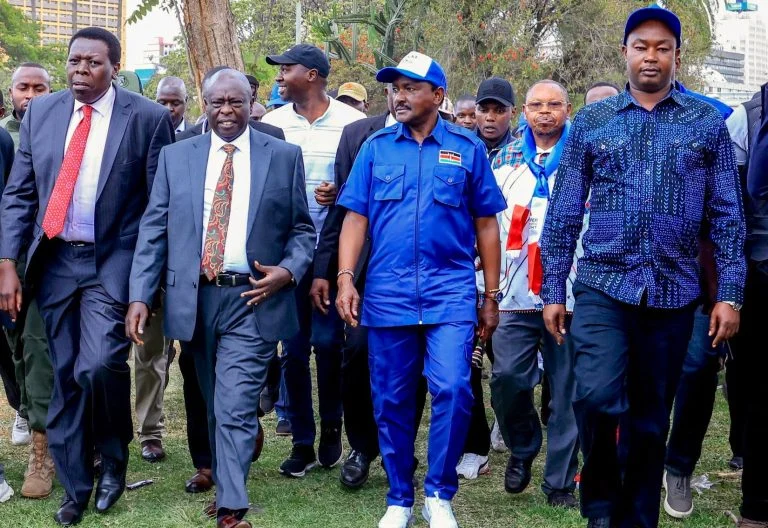
A coalition of opposition leaders operating under the banner of the United Alternative Government has unveiled a proposed “People’s Budget” for the 2026/27 financial year, positioning it as an alternative to the national budget set to be presented by Finance Cabinet Secretary John Mbadi.
The proposal was launched during a joint briefing attended by Kalonzo Musyoka, Rigathi Gachagua, Fred Matiang’i and Justin Muturi.
Criticism of Government Spending Plans
The opposition leaders criticized the government’s proposed KSh4.82 trillion budget, arguing that it places excessive reliance on borrowing while failing to adequately address the needs of ordinary Kenyans.
Kalonzo pointed to the projected fiscal deficit of KSh1.11 trillion, saying continued borrowing has contributed to rising public debt and increased pressure on taxpayers.
According to the coalition, a significant share of government revenue is now directed toward debt servicing instead of funding critical public services.
Education and Healthcare at the Centre
The opposition claimed that education remains underfunded despite constitutional guarantees of free basic education.
The coalition argued that funding should be redirected toward:
- School infrastructure development
- Classroom resources
- Student welfare programmes
- Support for free primary, junior secondary and secondary education
On healthcare, the group criticized the implementation of the Social Health Authority (SHA), alleging that funding and operational challenges have negatively affected service delivery in public hospitals.
The coalition proposed increased healthcare funding and the revival of programmes such as:
- Linda Mama
- Edu Afya
Opposition to New Taxes
The coalition also opposed several tax measures proposed in the Finance Bill 2026, particularly those affecting mobile money services and mobile phones.
According to the opposition leaders, such taxes would increase the financial burden on millions of Kenyans who rely on digital financial services for everyday transactions.
Key Proposals in the People’s Budget
The alternative budget outlines several priorities, including:
- Increased investment in education and healthcare
- A national youth employment programme
- Lower fuel costs
- Abolition of the Housing Levy
- Reduced expenditure in selected government offices and agencies
- Increased funding for social services and development projects
Gachagua Renews Opposition to Housing Levy
During the briefing, Gachagua reiterated his opposition to the Affordable Housing Programme and the Housing Levy, maintaining that an alternative administration would dismantle the current framework.
He further advised Kenyans to exercise caution before investing in housing projects linked to the programme, arguing that its future could be uncertain if there is a change in government.
Matiang’i Raises Alarm Over School Dropouts
Matiang’i expressed concern over what he described as growing school dropout rates, warning that gains made in expanding access to education could be reversed if urgent interventions are not implemented.
He said a future administration should prioritize policies aimed at keeping learners in school and improving the quality of education.
Budget Battle Takes Shape
The unveiling of the People’s Budget sets up a direct policy contest between the opposition and President William Ruto’s administration ahead of the official budget presentation.
While the opposition argues its proposals focus on lowering the cost of living, creating jobs and improving public services, the government is expected to defend its fiscal strategy and spending priorities when it presents the 2026/27 budget to Parliament.
The competing visions are likely to shape the country’s economic and political debate as Kenya heads toward the 2027 General Election.