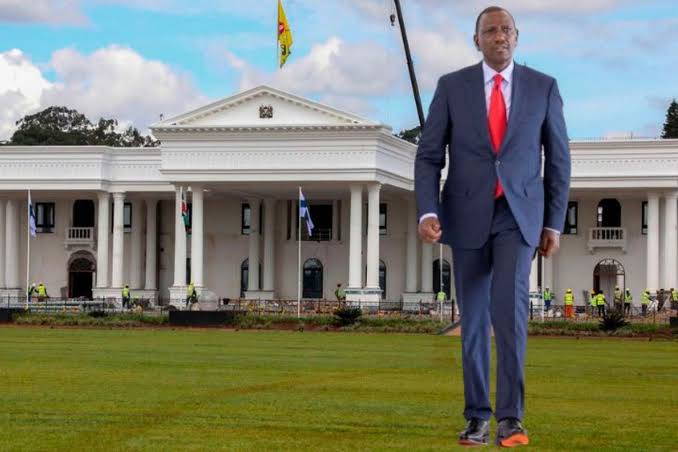
State House spending hit a record Ksh.18.55 billion in the 2025/2026 financial year, more than double its original budget, with Ksh.6.73 billion classified as “other expenses” despite President William Ruto abolishing the confidential vote two years ago.
A Controller of Budget report on budget implementation for the year ended June 2026 shows that State House significantly exceeded its initial allocation of Ksh.8.5 billion.
The institution ultimately spent Ksh.18.55 billion during the financial year, representing an increase of more than Ksh.10 billion from the amount initially approved.
State House Spent Ksh.6.7 Billion Under ‘Other Expenses’
Of the total expenditure, Ksh.6.73 billion was recorded under the “other expenses” category, which covers expenditure that does not fall under ordinary budget votes.
The disclosure has raised questions about how public funds were utilised at State House, with the Controller of Budget report appearing to group some undisclosed expenditure under the category.
State House had received an allocation of Ksh.8.5 billion in the budget presented to Parliament in June 2025.
However, by December 2025, the institution had spent more than 90 per cent of its annual allocation, prompting the National Treasury to authorise additional expenditure under Article 223 of the Constitution.
The additional expenditure was subsequently approved by Parliament.
At the time, State House had hosted several delegations and events, including a gathering attended by about 10,000 teachers, who were reportedly each given Ksh.10,000 as tokens.
Treasury Spent Ksh.12.6 Billion on Emergency Security
The Controller of Budget report also revealed that the National Treasury spent more on emergency security operations than the National Police Service during the financial year.
Treasury expenditure on emergency security operations stood at Ksh.12.62 billion, compared with Ksh.11.39 billion spent by the National Police Service.
The State Department for Internal Security and National Administration recorded the highest expenditure in the category, spending Ksh.21.53 billion.
Security operations are ordinarily considered confidential in nature, with the additional spending raising questions about how the funds were utilised and their beneficiaries.
Kenya’s Public Debt Rises to Ksh.13 Trillion
The Controller of Budget also raised concerns over Kenya’s rapidly rising public debt.
The country’s public debt stock increased from Ksh.11.80 trillion in June 2025 to Ksh.13.01 trillion in June 2026, representing an increase of about 10 per cent.
According to the report, public debt now stands at approximately 74 per cent of the country’s Gross Domestic Product (GDP), significantly above the statutory threshold of 55 per cent.
The Controller of Budget further warned that domestic borrowing was increasing at an unusual rate, with domestic debt accounting for 56 per cent of Kenya’s total public debt.
The increase has been attributed to increased borrowing through Treasury bills and bonds, while external debt also grew following the issuance of new international sovereign bonds.
Kenya Spends Ksh.1.77 Trillion Servicing Debt
The rising debt stock has also increased the amount of money the government spends servicing its obligations.
Kenya spent Ksh.1.77 trillion on debt servicing during the 2025/2026 financial year, up from Ksh.1.59 trillion in the previous financial year.
Over the past four years, the country’s public debt has risen from Ksh.8.59 trillion in June 2022 to Ksh.13.12 trillion in June 2026, representing an increase of about 53 per cent.
The figures have renewed concerns over the sustainability of Kenya’s borrowing and the growing share of government revenue being directed towards debt repayment.