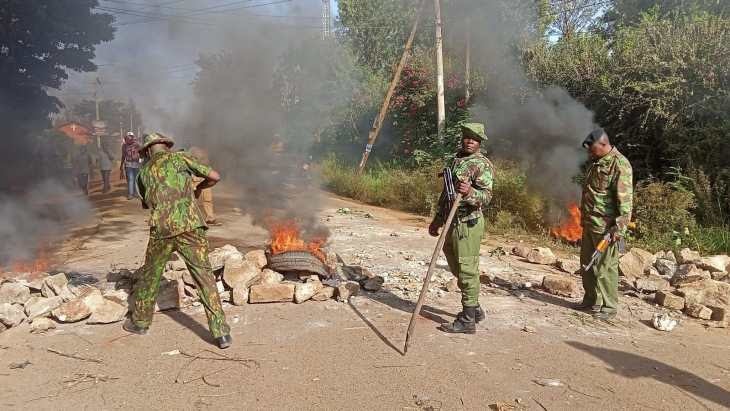
Members of Kenya’s security forces who shot dead anti-tax protesters outside Parliament on June 25, 2024, have been identified through a BBC investigation.
Analysis of over 5,000 images by BBC Africa Eye shows that the protesters killed were unarmed and posed no threat, despite the constitutional guarantee of the right to peaceful protest. The killings sparked national outrage.
Although Kenya’s Independent Policing Oversight Authority (IPOA) was directed by Parliament to investigate and publicly release a report on the deaths, no findings have been issued, and no one has been held accountable.
Using videos and photos from journalists and protesters — verified through metadata, livestream timestamps, and visible public clocks — the BBC created a 3D reconstruction of the events around Parliament. This analysis traced fatal shots back to the weapons of a police officer and a soldier.
Timeline of the Day
On the morning of June 25, young Kenyans, largely mobilized via social media and dubbed “Gen Z protesters,” gathered in central Nairobi for a third major demonstration against the Finance Bill 2024.
“It was a beautiful party,” said human rights activist Boniface Mwangi, describing the early festive mood. Protesters brought Bluetooth speakers, painted faces, and waved flags.
Earlier protests had already forced lawmakers to remove some tax hikes, including those on bread, cooking oil, mobile money, and motor vehicles. However, other measures to raise $2.7 billion remained.
By 09:30 AM, MPs had entered Parliament, and outside, thousands converged from all directions.
Initially met with tear gas and truncheons, the protesters faced escalating force as police deployed water cannons and rubber bullets. By 1:00 PM, over 100,000 people were estimated to be on the streets.
At 2:14 PM, Parliament passed the Finance Bill, prompting outrage among the protesters. Determined to make their voices heard, the demonstrators surged forward, breaking through police lines by 2:20 PM.
After breaching the parliamentary fence briefly, protesters were forced back by security forces. At this point, BBC footage captured a plain-clothed officer shouting “uaa!” — Swahili for “kill.” Moments later, gunshots rang out, and seven protesters fell.
Two men, David Chege (39) and Ericsson Mutisya (25), were killed. Five others were injured, with one left paralyzed.
Journalist Ademba Allans was filmed trying to reach the wounded while carrying a Kenyan flag. The BBC identified the shooter by analyzing his distinctive riot gear — notably an upturned neck guard — matching him to later footage. His name remains unknown, but the plain-clothes officer shouting orders was identified as John Kaboi, reportedly stationed at Central Nairobi Police Station.
When approached, Kenya’s police stated they could not investigate themselves, citing IPOA’s responsibility. Kaboi did not respond to BBC’s request for comment.
Further Fatalities
Despite the bloodshed, protesters pushed into Parliament grounds at 2:57 PM. Footage showed many walking peacefully, hands raised. Though warning shots were fired, the crowd advanced.
Inside Parliament, chaos briefly ensued. Parts of the building were vandalized and set on fire, but the incursion lasted only a few minutes.
As protesters retreated at 3:04 PM, more gunfire erupted. BBC footage captured three individuals shot while fleeing, including 27-year-old finance student Eric Shieni, who was fatally shot in the back of the head from 25 meters away. Like the others, he was unarmed.
Using over 150 images, the BBC identified the soldier who fired the shot, although his name remains unknown.
Faith Odhiambo, president of the Law Society of Kenya, said, “The video is very clear. The aim was to kill those protesters. Shooting him in the head shows it was an execution.”
The Kenyan Defence Forces (KDF) stated they had received no investigation request from IPOA but insisted they operate within the rule of law.
Aftermath
Following the shootings, Allans helped evacuate the wounded. “I feared for my life,” he said, “but I also feared letting others die when I could help.”
By the end of June 25, Kenya’s Human Rights Commission reported 39 deaths and 361 injuries nationwide.
That evening, President William Ruto praised security forces for defending “the nation’s sovereignty” against “organized criminals” who he claimed had hijacked the protests.
However, facing mounting pressure, Ruto announced the next day that he would not sign the Finance Bill into law.
“Listening keenly to the people of Kenya, who have said loudly they want nothing to do with this Finance Bill 2024, I concede,” he said in a televised address.
To date, no security official has been held responsible for the killings, and no official investigative report has been released.