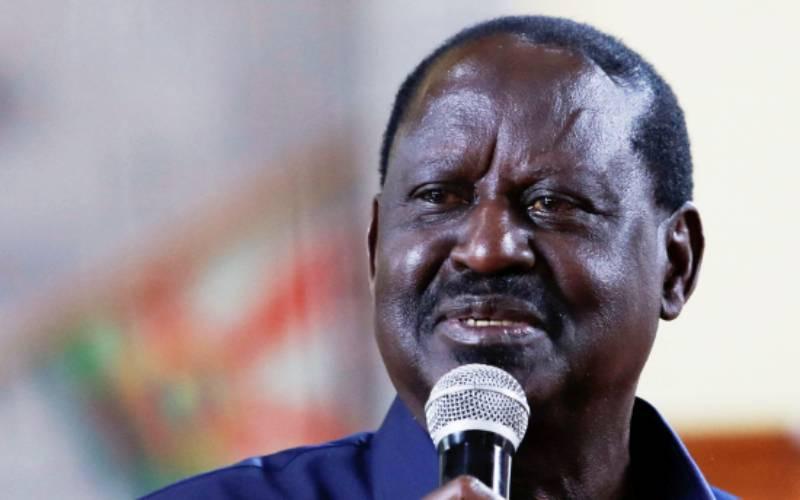
Former Prime Minister and ODM party leader Raila Odinga has called for the need to reassess the role of the Constituency Development Fund (CDF) within the framework of devolution.
Odinga said CDF undermines the constitutional separation of roles but underscored the historical importance of the fund in addressing regional development disparities under a centralized system.
Addressing over 3,500 delegates, during the Institute of Certified Public Accountants of Kenya (ICPAK) 42nd annual conference held at Sarova Whitesands, Mombasa, Odinga
However, he noted that with the successful implementation of devolution, there is now a stronger case for aligning development initiatives with the mandates of county governments.
This year’s conference edition’s theme is ‘Beyond the Profession: Accountants in all spheres of the economy’
“CDF served its purpose before devolution, but today, that role must be carried out by counties. Members of Parliament (MPs) should not be involved in project implementation,” Odinga said.
He emphasized that Members of Parliament must concentrate on their constitutional responsibilities of legislation, oversight, and representation, warning that continued control of development funds creates a conflict of interest.
“You cannot provide oversight over the national government while implementing the very projects you are expected to scrutinize. It erodes accountability,” he said.
Furthermore, Odinga proposed that bursary distribution and other forms of community support should be fully transferred to county governments to ensure equitable and transparent service delivery.
“It’s not that we oppose bursaries. But they should be administered by counties, not MPs or Members of County Assembly (MCAs),” he said.
While underscoring the importance of protecting devolution, Odinga also called for accountability in county leadership, noting that governors implicated in corruption should face the full weight of the law.
“We are not defending anyone. Governors found guilty of corruption must be prosecuted. At the same time, county governments must be allowed to execute their mandates without interference,” he stated.
The ODM leader also urged for a national shift in mindset to accelerate Kenya’s economic transformation under the Vision 2030 blueprint. He cited gains made in infrastructure and energy but pointed out that persistent challenges such as youth unemployment, inequality, and political instability continue to stall progress.
“To become globally competitive, Kenya must reduce the tax burden, promote good governance, pursue industrialization, and invest strategically in education and infrastructure,” he said.
ICPAK Chairman CPA Philip Kakai, in his opening remarks, echoed Odinga’s sentiments, stressing the critical role of professionals, particularly accountants, in shaping the country’s economic trajectory.
Kakai described Kenya as being at a pivotal moment, citing slowed economic growth, ballooning public debt exceeding Sh11 trillion, and widespread youth unemployment.
“This is not the time for professionals to sit on the sidelines. Accountants must step into leadership roles and drive reforms in governance, sustainability, and policy,” Kakai said.
He warned that corruption remains a significant barrier to progress, urging financial professionals to lead by example in promoting transparency and ethical leadership.
“Corruption is not just theft; it is economic sabotage,” he declared, adding, “We must summon collective courage to uphold accountability and restore public trust. Without it, there can be no meaningful prosperity.”