Iran has issued a fresh warning to the United States as a fragile ceasefire between the two countries approaches its expiry, raising fears of renewed confrontation in an already volatile region.
Speaking in Tehran, Iran’s parliamentary speaker signaled that the country is preparing “new cards on the battlefield” should hostilities resume. The statement highlights growing tensions as both sides weigh their next moves ahead of the ceasefire deadline on Wednesday.
On the American side, Donald Trump has downplayed the chances of extending the truce, describing an extension as “highly unlikely.”
His remarks suggest a hardening stance in Washington, where policymakers appear increasingly skeptical of Iran’s intentions and unwilling to prolong temporary arrangements without significant concessions.
Diplomatic efforts, however, have not entirely collapsed. Reports from US media indicate that Vice-President JD Vance is expected to travel to Pakistan for high-level discussions aimed at easing tensions.
Islamabad has emerged as a potential neutral ground for backchannel negotiations, though uncertainty remains over whether Tehran will send a delegation to participate in the talks.
On the ground in Islamabad, visible signs of preparation contrast with a deep sense of ambiguity.
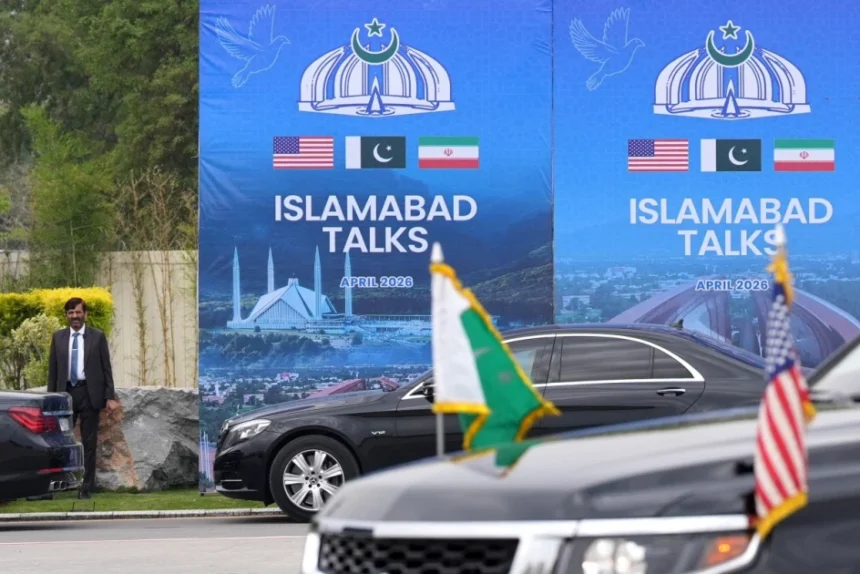
Security checkpoints remain in place across the city, while banners promoting the so-called “Islamabad Talks” line major roads – an indication of diplomatic anticipation mixed with caution.
Yet officials have stopped short of confirming whether the talks will proceed as planned, reflecting the fragile nature of the process.
Inside Tehran, the mood is equally tense.
Analysts and citizens alike are expressing concern that any negotiated settlement could come with demands that Iran may find politically or strategically unacceptable. Issues such as nuclear development, sanctions relief, and regional influence continue to form the core of disagreements between the two sides.
The broader international community is also watching developments closely, particularly given the potential economic and security implications.
China, a key global stakeholder in Middle Eastern stability, has weighed in through its president, Xi Jinping, who emphasized the need to maintain “normal traffic” through the Strait of Hormuz.
The Strait of Hormuz is one of the world’s most critical chokepoints, handling roughly a fifth of global oil shipments. Any disruption to maritime traffic in the narrow passage could send shockwaves through global energy markets, driving up prices and exacerbating inflationary pressures worldwide.
Historically, tensions between Iran and the United States have often played out through both direct confrontation and proxy dynamics across the Middle East.
Flashpoints have included disputes over Iran’s nuclear programme, US sanctions, and military incidents in the Gulf region. While ceasefires and temporary de-escalation measures have occasionally reduced immediate risks, they have rarely translated into long-term stability.
As the deadline looms, the situation remains highly fluid. The absence of confirmed talks, coupled with increasingly assertive rhetoric from both sides, suggests that the window for diplomacy may be narrowing.
Whether backchannel negotiations in Pakistan can yield progress – or whether both nations are bracing for another cycle of escalation – will likely become clear in the coming days.