
Protests in Nairobi gathered momentum on Tuesday as groups of young people flooded the streets to demonstrate against rising fuel prices and the soaring cost of living.
What began as a relatively calm morning quickly shifted as protesters moved through sections of the central business district, waving Kenyan flags and chanting patriotic songs.
Their growing numbers marked a clear departure from the earlier hours of the day, when businesses remained open and traffic flowed with minimal disruption.
By midday, security presence had significantly intensified. Police officers, many armed with batons, were deployed across key areas in the CBD, closely monitoring the unfolding demonstrations.

Anti-terror police units were also spotted in the area, and at least a handful of protesters were arrested outside the National Archives and bundled into police vehicles.
The protests, widely shared online under the hashtag #RejectFuelPrices, have been driven by mounting frustration over the rising cost of essential commodities.
Fuel prices, in particular, have become a flashpoint, with many Kenyans arguing that the increases are placing unsustainable pressure on household incomes and businesses.
Water cannons were positioned along several streets, signaling preparedness by security agencies to contain any escalation. While the demonstrations remained largely peaceful in the early stages, authorities appeared to be bracing for potential unrest.
The action follows a call by a coalition of Gen Z activists and opposition-linked groups for nationwide protests on April 21.
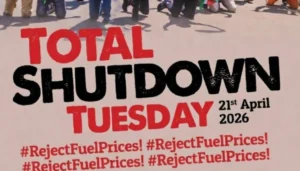
Organisers say their goal is to push for further reductions in fuel prices and compel the government to address broader economic challenges affecting ordinary citizens.
Recent pricing adjustments by the Energy and Petroleum Regulatory Authority (EPRA) have fueled the discontent.
In its April–May review, the regulator initially announced steep increases—raising petrol prices by Sh28.69 and diesel by Sh40.30 per litre. However, a subsequent revision lowered the prices after VAT was reduced from 13 percent to 8 percent.
In Nairobi, the revised prices saw super petrol drop to Sh197.60 per litre, while diesel fell to Sh196.63. Kerosene prices remained unchanged at Sh152.78. The adjustments, which took effect on April 16, will remain in place until May 14, 2026.
Despite the reductions, prices remain significantly higher than previous months, following an earlier spike that pushed petrol to Sh206.97 and diesel to Sh206.84 per litre.
Authorities had earlier signaled their opposition to the demonstrations. Nairobi police commander Issa Mohamud stated that the protests were unlawful due to the absence of formal notification to the National Police Service (NPS), as required under public order laws.
“We are aware of planned protests regarding fuel prices, but no notification has been given. This makes the protests unlawful, and we will take appropriate action,” he said, while reiterating that the police do not oppose lawful picketing conducted within the legal framework.
Adding to the tension, the United States Embassy in Nairobi issued a security alert on April 20, warning its citizens to exercise caution ahead of the demonstrations. The embassy noted that protests in Kenya can disrupt movement by blocking major roads and intersections, often resulting in heavy traffic congestion.
It also cautioned that while many demonstrations remain peaceful, some have previously escalated into violence, involving stone-throwing, tear gas, and in rare instances, the use of deadly force by police.